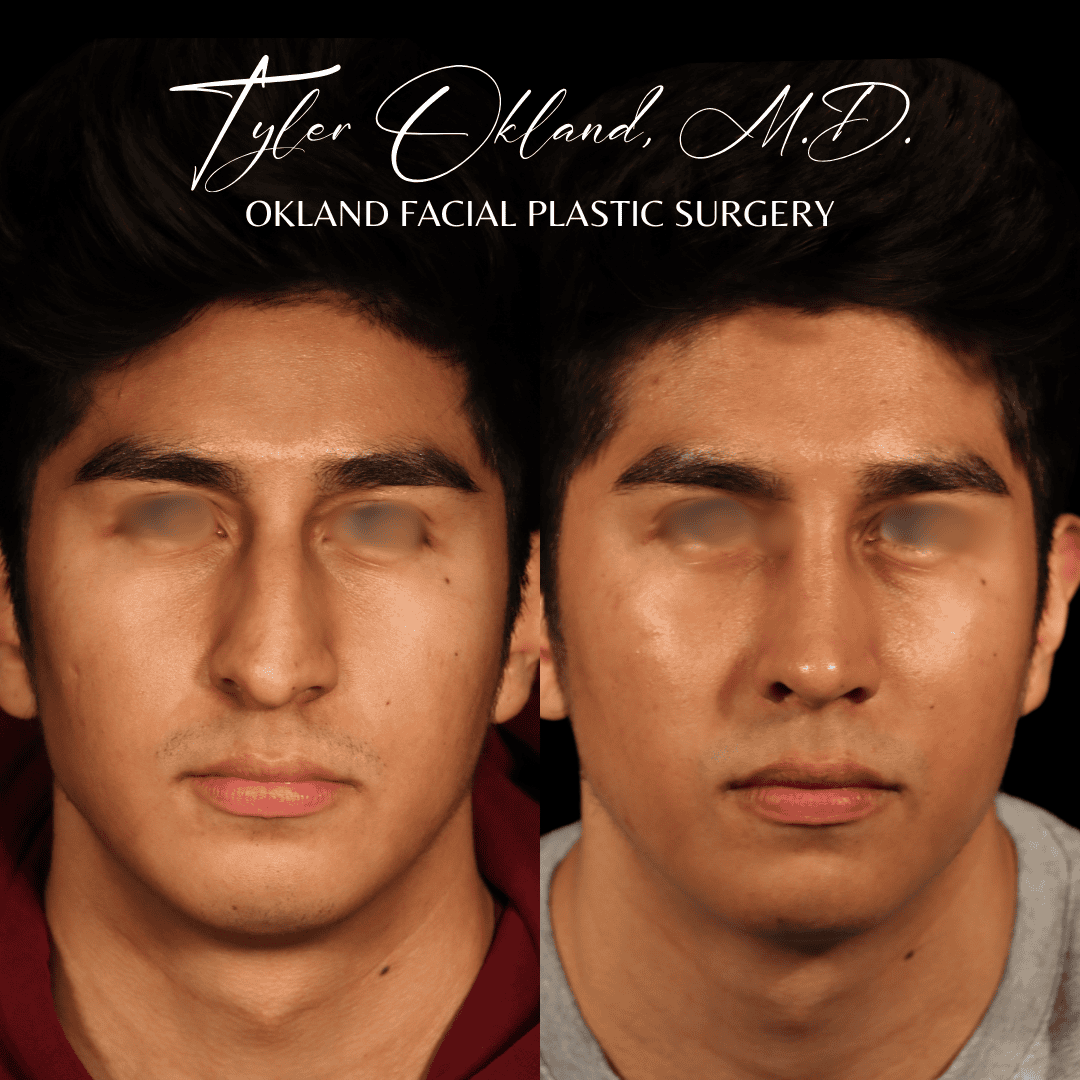
Rhinoplasty by Tyler Okland, MD

Rhinoplasty in Denver, Colorado

Natural, precise rhinoplasty designed around your face, your identity and your breathing.

Written and medically reviewed by Tyler Okland, MD, double board-certified facial plastic and reconstructive surgeon. Last medically reviewed August 2026.

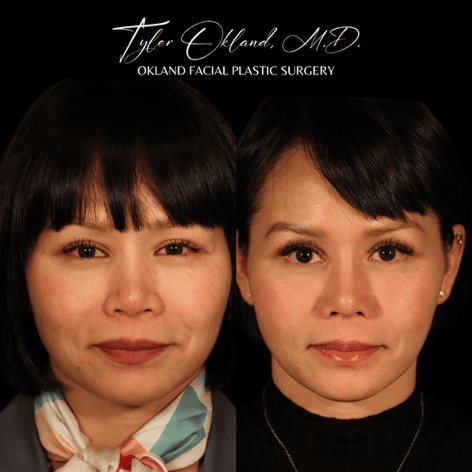
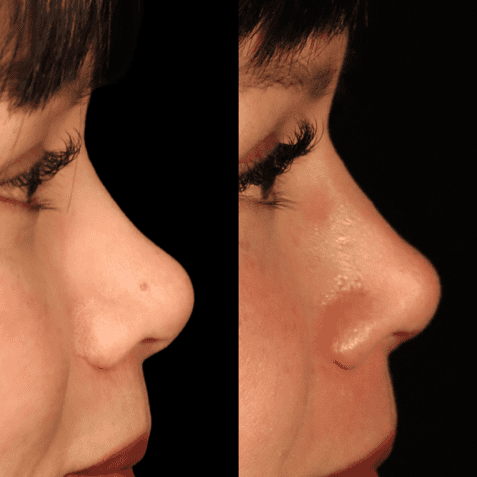
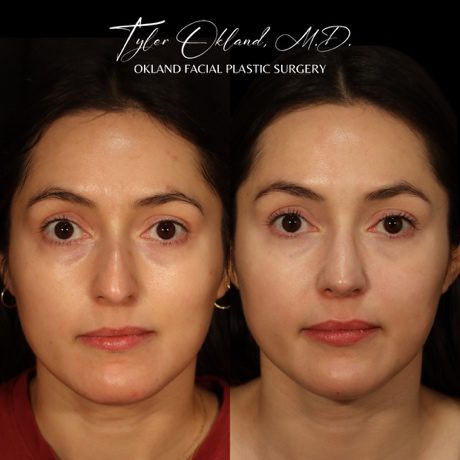
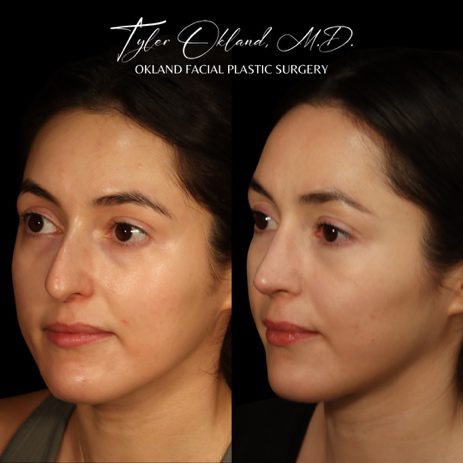
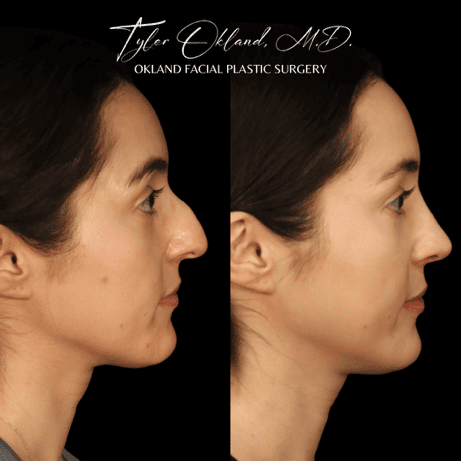
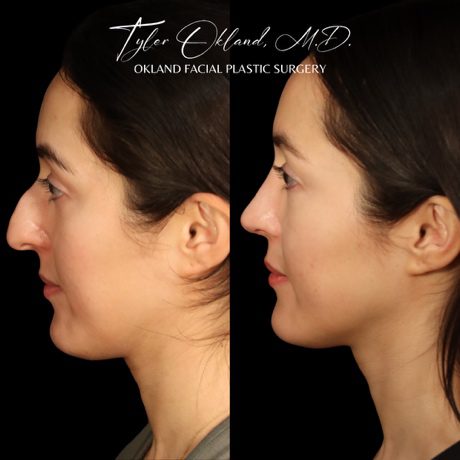
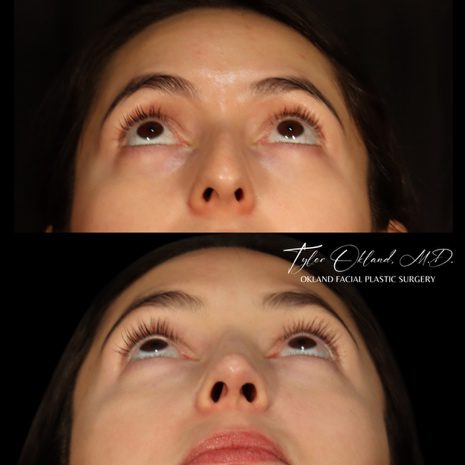
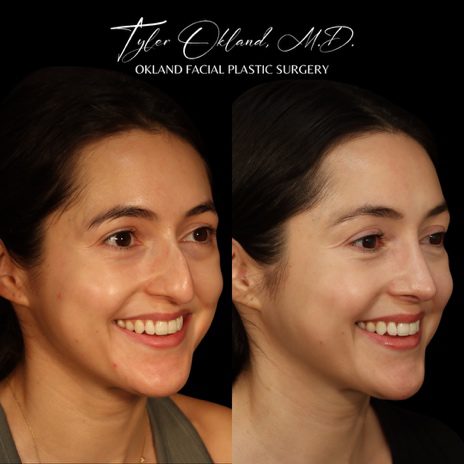
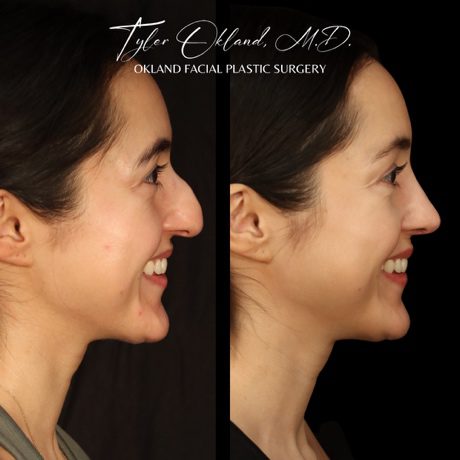
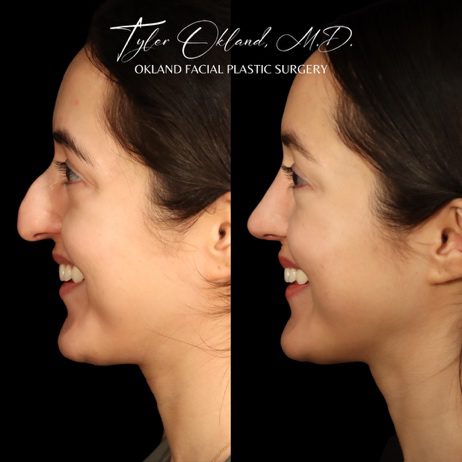
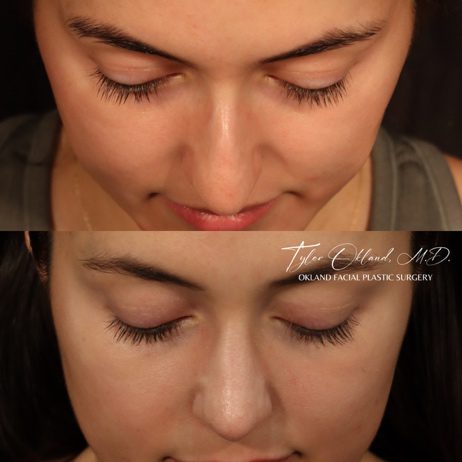
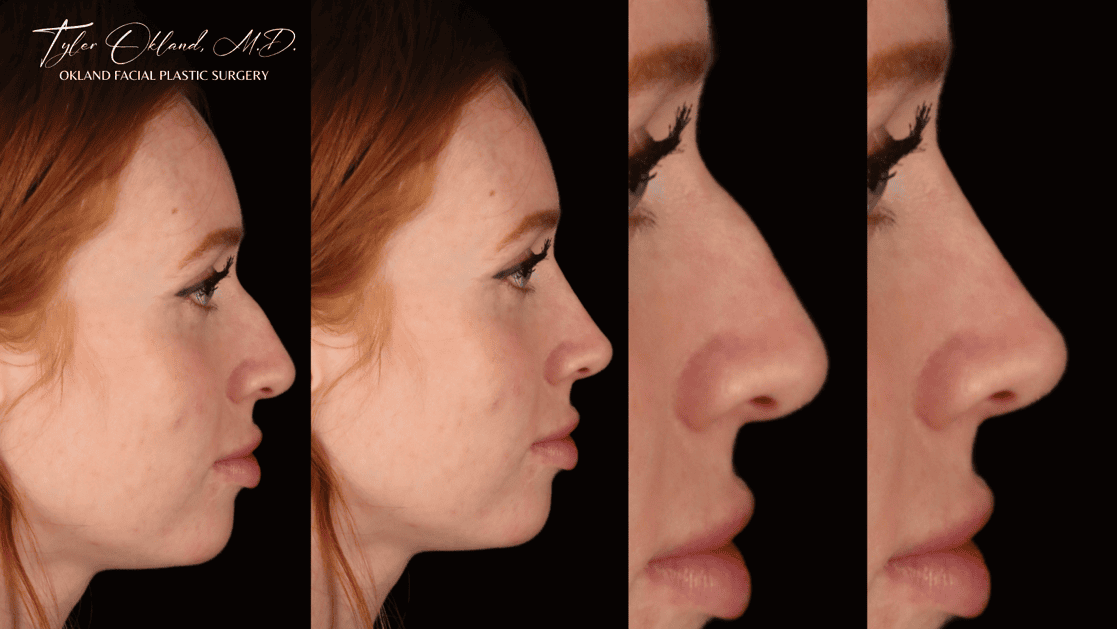
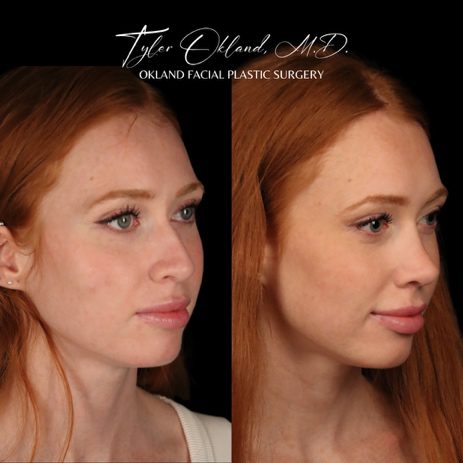
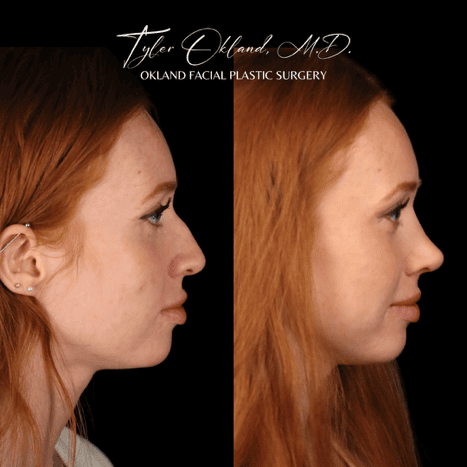
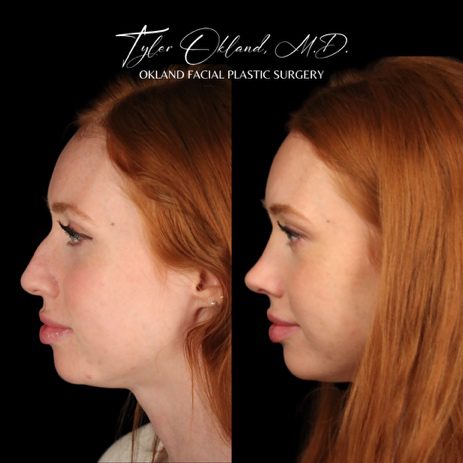
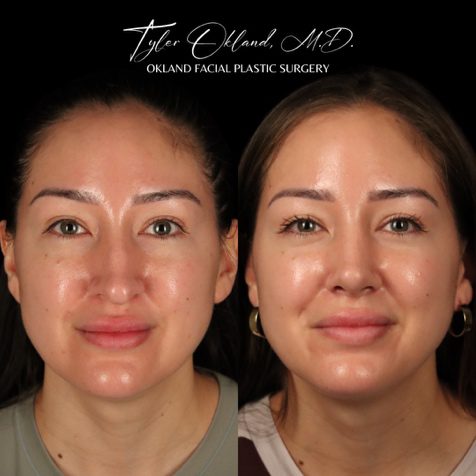
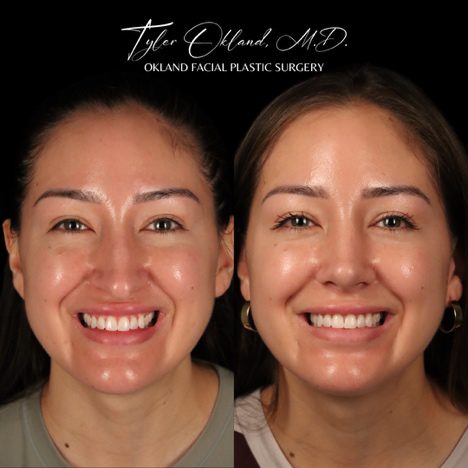
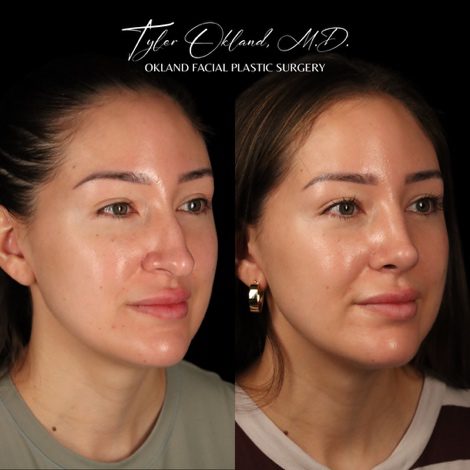
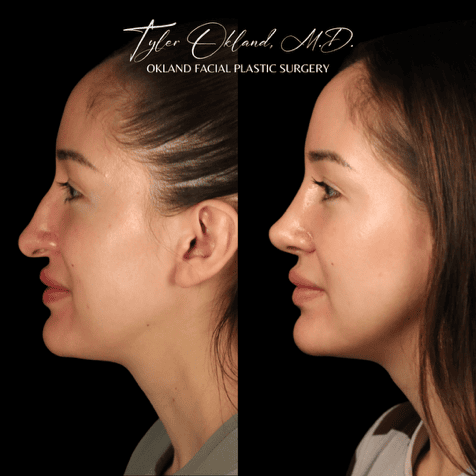
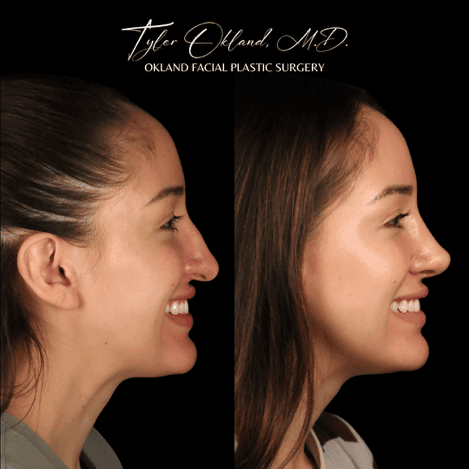
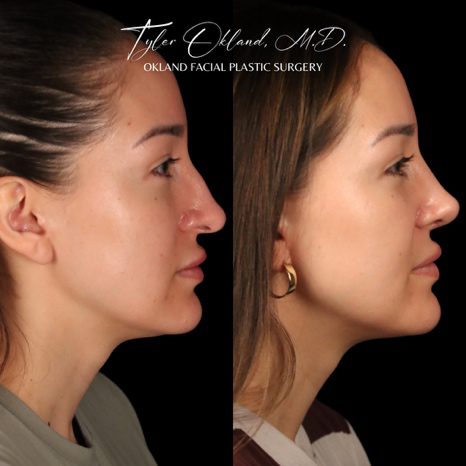
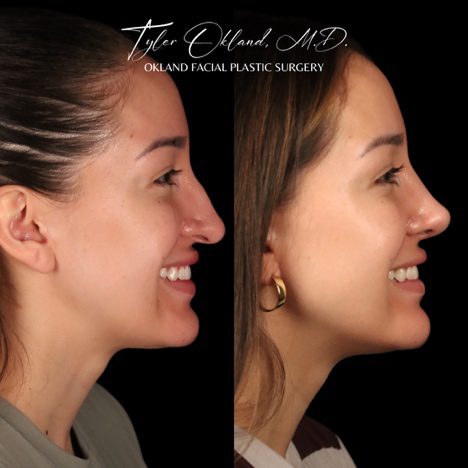
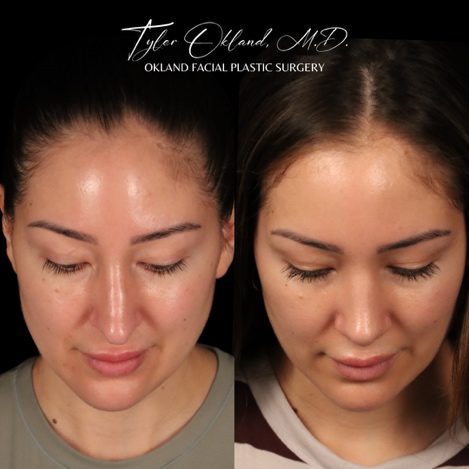
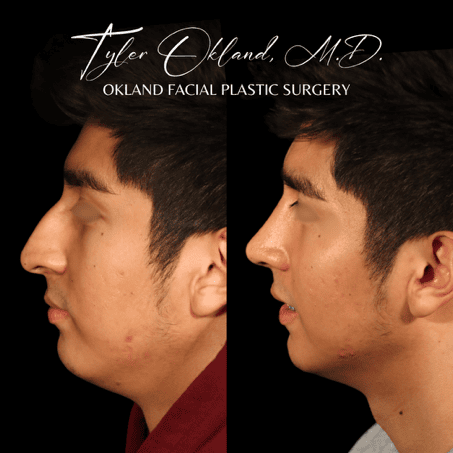
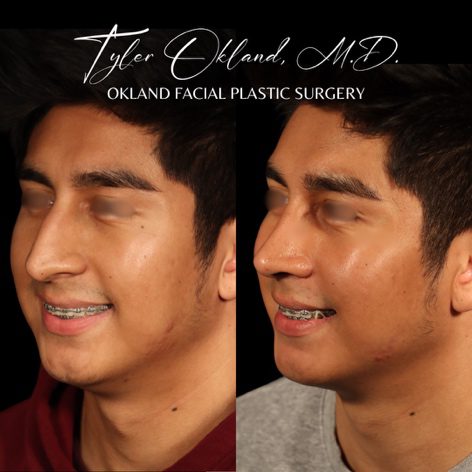
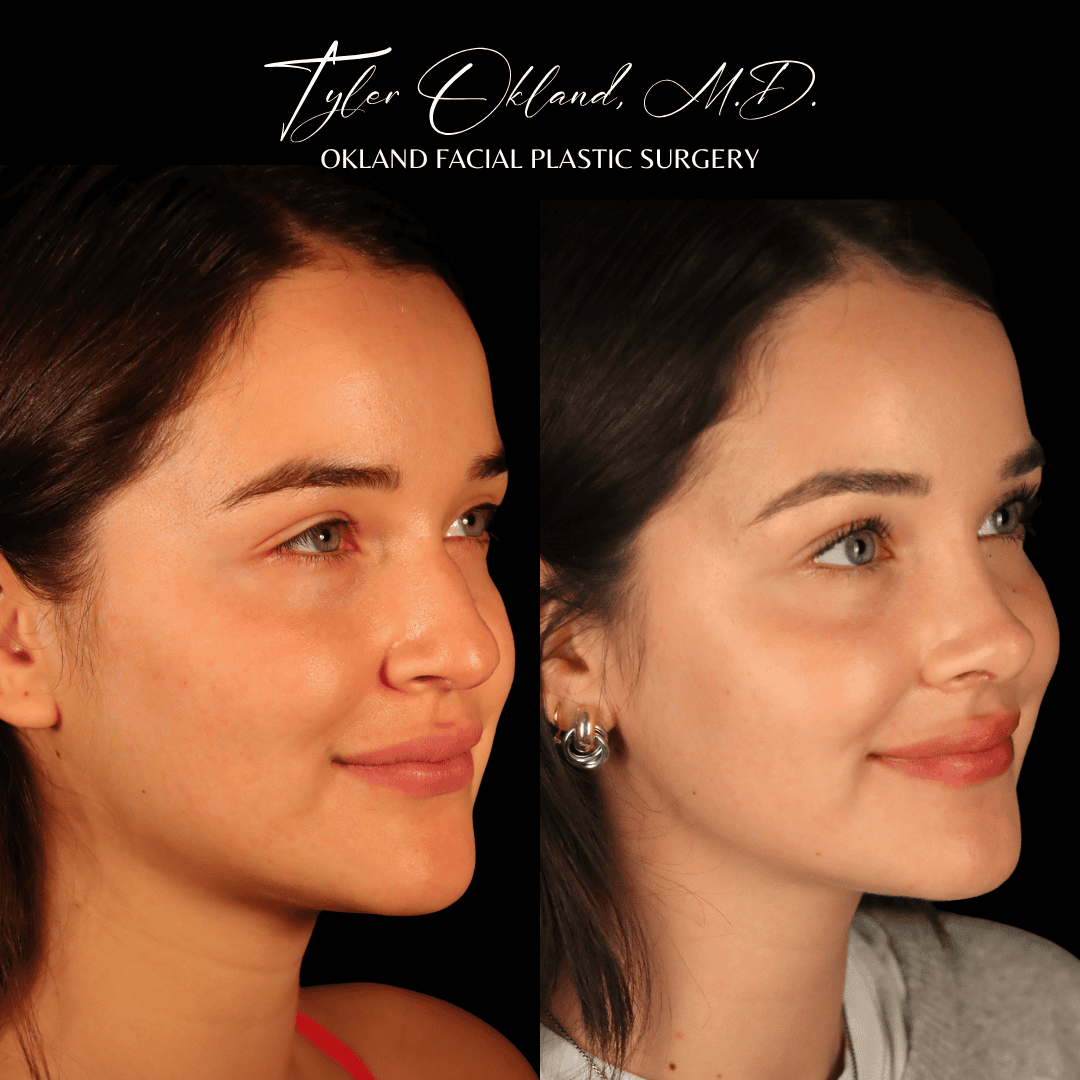
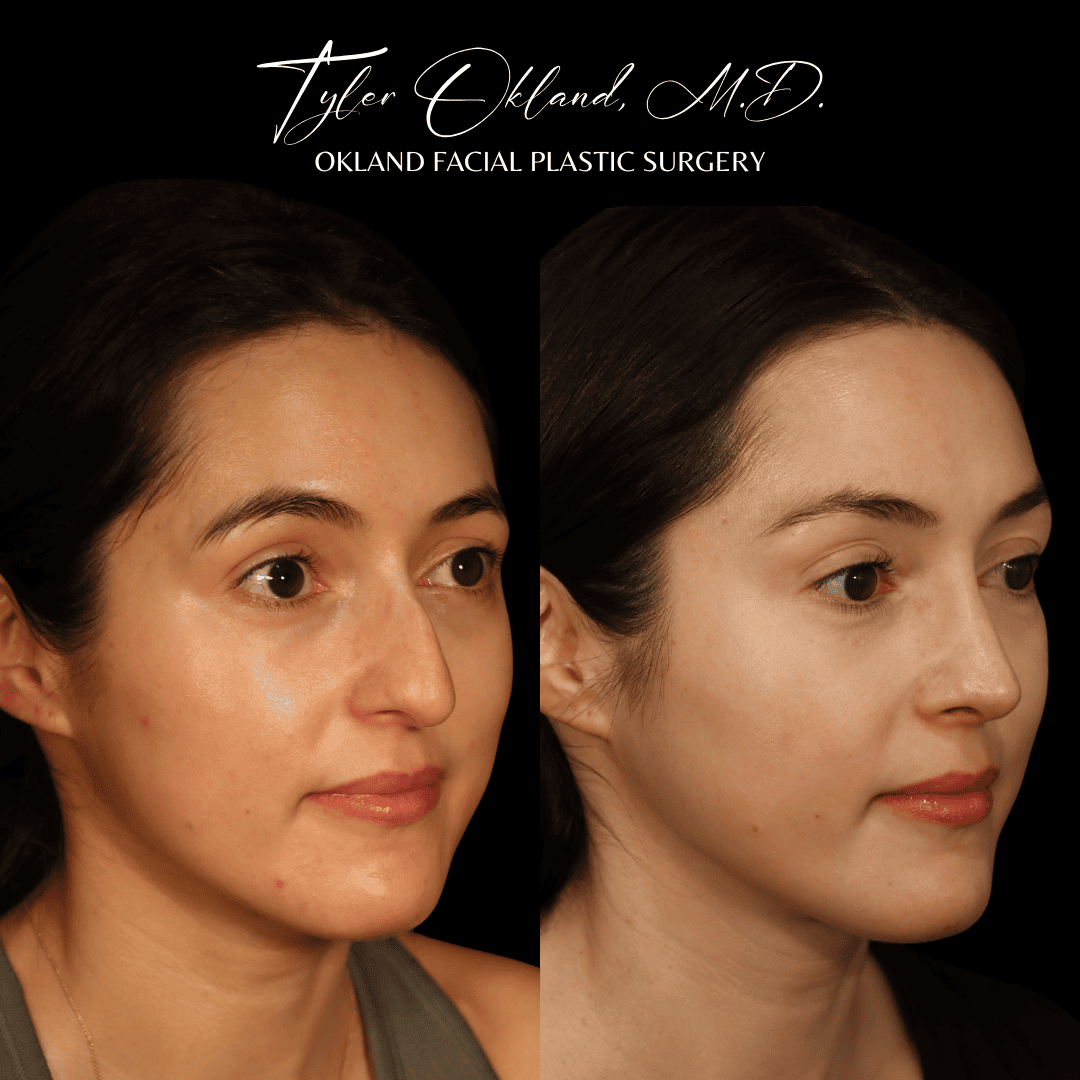
Primary rhinoplasty before-and-after result by Dr. Tyler Okland

This page is about primary rhinoplasty—the first rhinoplasty performed on a nose. If you have had previous nasal surgery, read about revision rhinoplasty in Denver.

Dr. Okland’s Rhinoplasty Philosophy

I believe there are certain shapes we are biologically programmed to find beautiful. Ratios, slopes and angles that—when harmonized—make music. That doesn’t mean making every nose the same. It means finding a way to optimize an individual’s anatomy to hit those high notes of beauty.

Most “nose jobs” I see look factory-built; mass-produced. Decent, predictable, common shapes that draw attention to themselves. In my practice, I attempt to do the opposite: build a nose that redirects attention away from itself and complements the natural beauty of your face. I want attention on your eyes, lips and smile—not your nose.

I want your nose to be the supporting actress, not the leading lady.

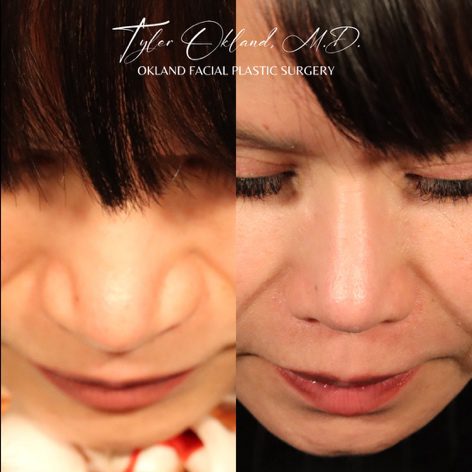
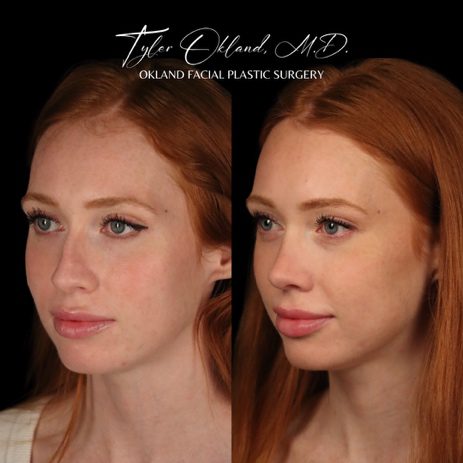
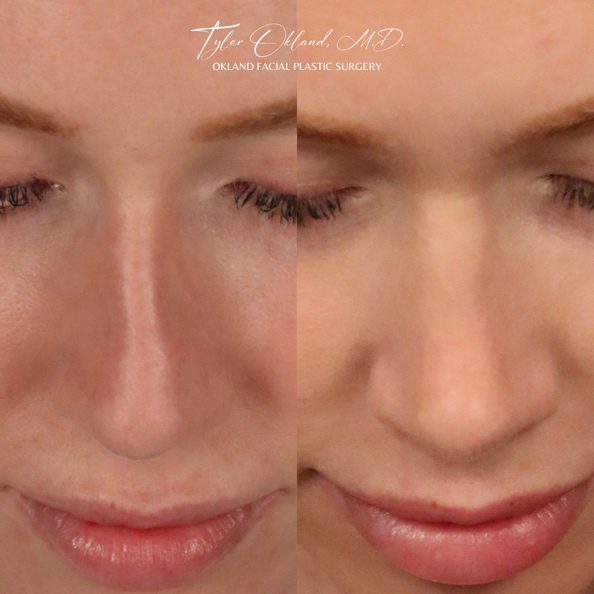
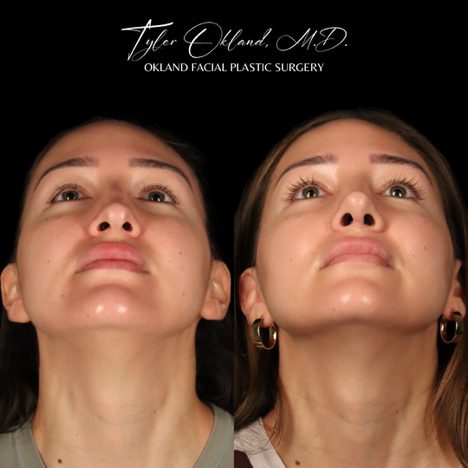
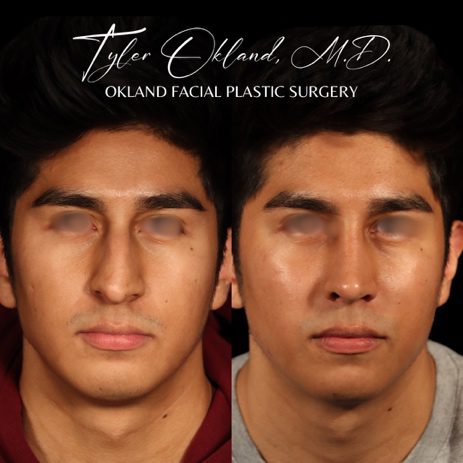
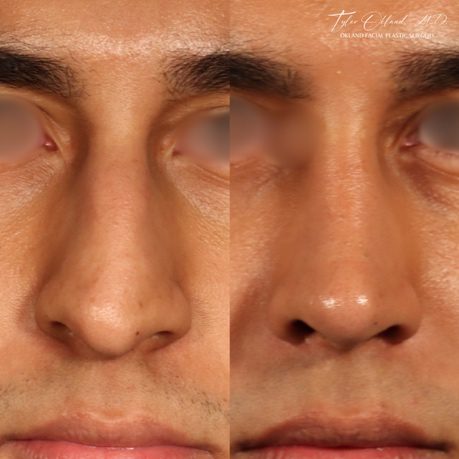
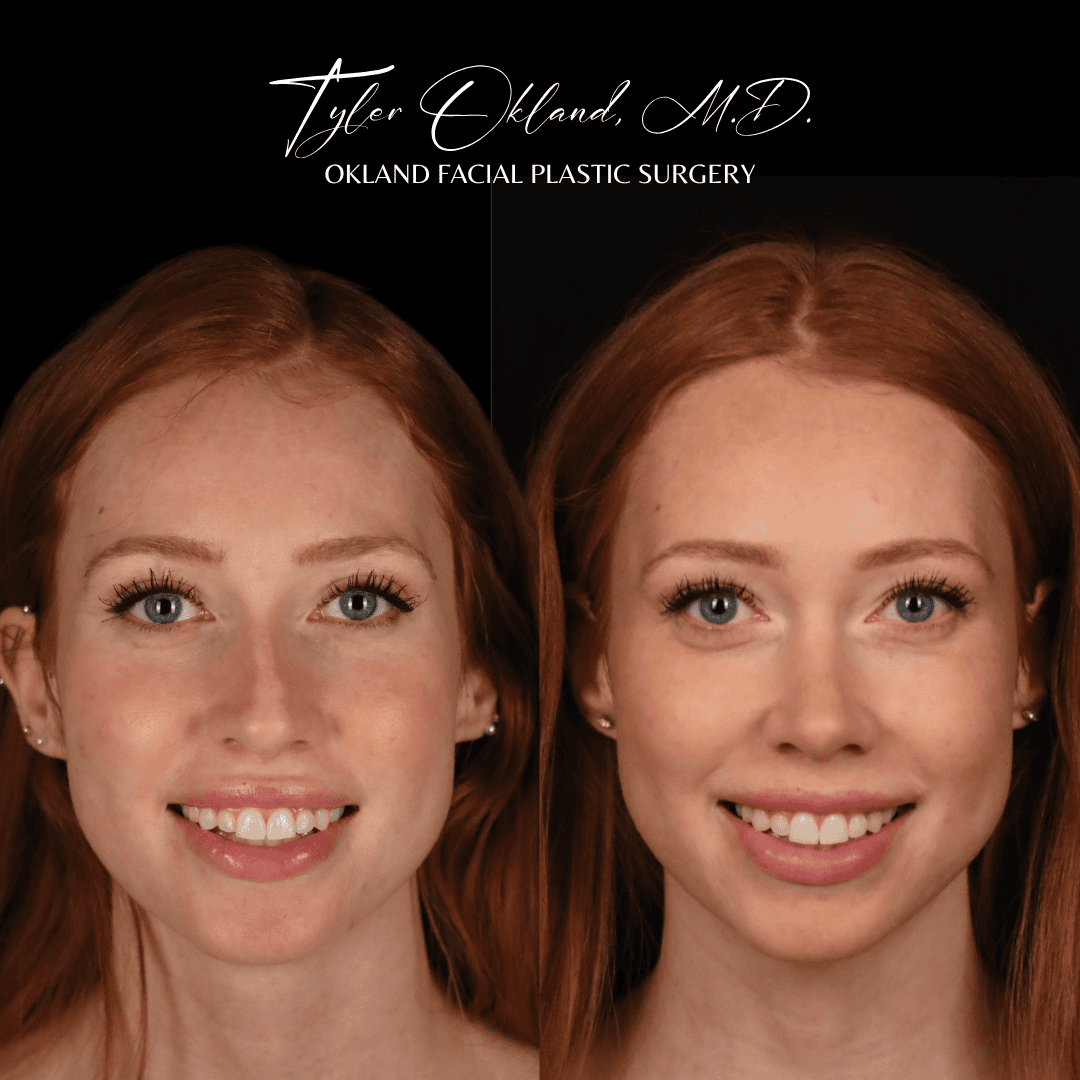
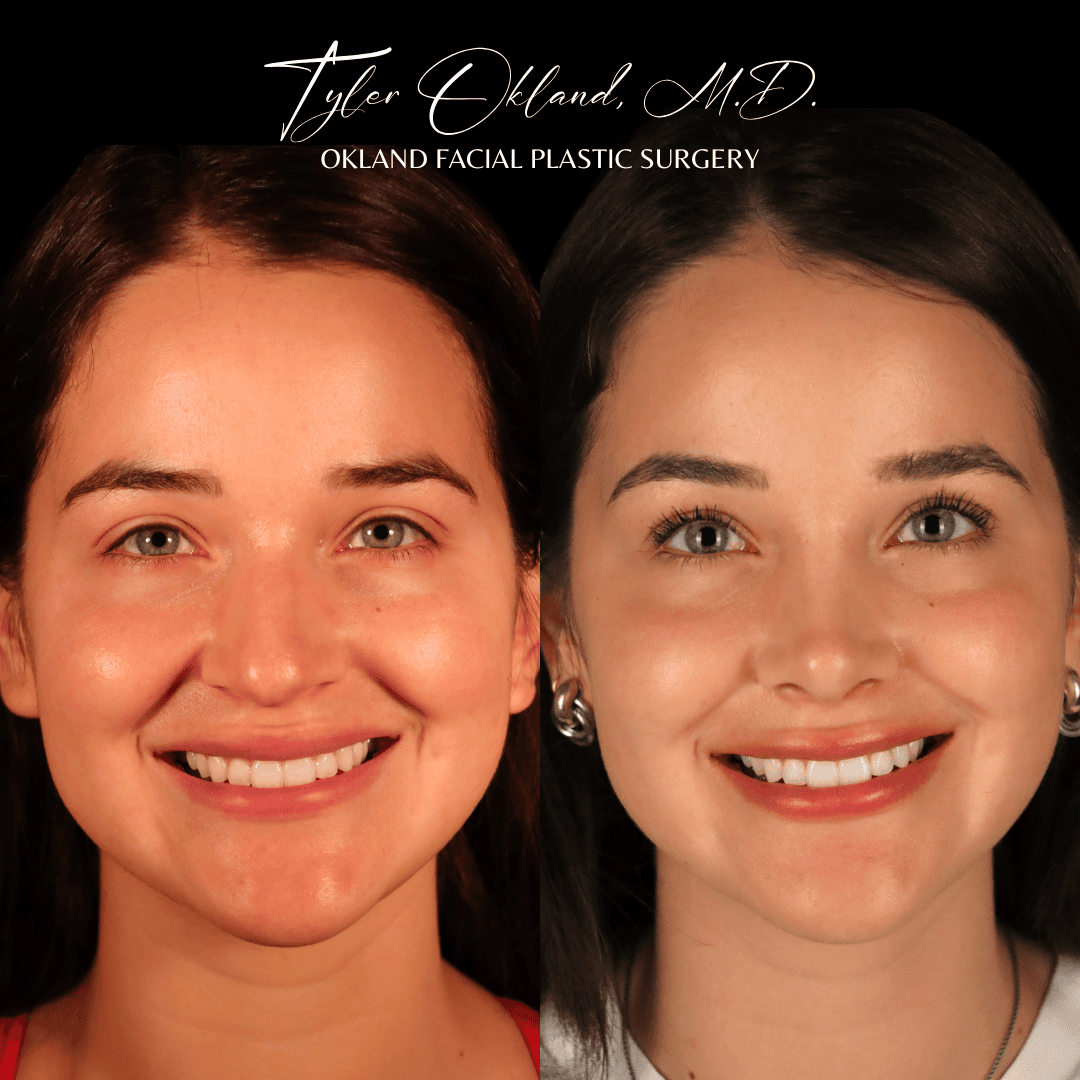
Frontal before-and-after primary rhinoplasty result

And I want your nose to breathe. I believe there is a relationship between the structures we perceive as beautiful and those that function well. A nose should look strong, open and supported because it should be strong, open and supported. At its highest level, modern rhinoplasty requires equal weighting of form and function—a firm refusal to separate the two. Every rhinoplasty plan for me begins with breathing: protect it, improve it, and build beauty on that foundation.

Build the foundation strong. Then make it beautiful.

Rhinoplasty is among the most technically demanding operations in cosmetic surgery. It requires technical precision, but also the softer powers of taste and vision—a willingness to study every millimeter in pursuit of individual harmony and refinement. And while I know perfection is not an attainable destination, I’ll spend my career chasing it for my patients.

02Assessment

A Face-First Rhinoplasty Assessment

My rhinoplasty assessment does not begin with the nose. It begins with the face. Before I decide what I might change, I study the intrinsic anatomy the nose has to belong to: skeletal structure, chin position, radix depth, brow prominence and lip length. I am meticulous about each view. I usually start in profile, then move to the frontal and three-quarter, or oblique, views. The profile gets outsized attention in rhinoplasty, but I tend to build noses for the three-quarter view. Most human interaction happens somewhere between straight-on and perfect profile. That is where another person actually experiences your nose, and where I think true facial harmony matters most. The frontal view is the hardest, and it is where I spend the most time. It has enormous implications for both appearance and breathing, and it is also the view you know best when you look in the mirror.

A Face-First Rhinoplasty Assessment+

But photographs are only part of the assessment. I want to see how the nose lives. I watch how it moves during quiet breathing, listen to how it sounds, look for collapse, and watch what happens to the tip when you smile. I perform a formal functional examination of the septum, internal and external nasal valves and turbinates. I evaluate tip support, skin thickness and cartilage strength. Then I marry all of that anatomy to identity. Are the shapes I am considering true to the patient’s ethnicity? Do they make sense for their face and the way they present themselves—their age, makeup, lip augmentation, or history of previous surgery? A beautiful nose cannot be designed independently of the person who wears it.

Finally, I always write down a few things I love about the patient’s existing nose. It may be their tip structure, the position of the nostril rims, or the relationship between the bridge and tip. Writing those things down is deliberate. It is a commitment to preserve some of the identity of that nose. I am not throwing away what you were born with and starting over. I am trying to identify what is already beautiful, protect it, and optimize the rest against the natural features of your face.

Nearly every dimension of a nose can be changed. The harder question—and the one that matters—is which changes belong together on your face while preserving strength, identity and breathing.
03Technique

How does Dr. Okland perform rhinoplasty?

Rhinoplasty is not simply an exercise in removing a hump or making a tip smaller. The nose is a load-bearing structure: every cut, suture and graft can change both the way it looks and the way it works. In my Denver practice, every rhinoplasty is an open structural septorhinoplasty. I expose the framework, correct the septum and airway, and then rebuild the nose with the patient’s own cartilage so the final shape is deliberate, supported and designed to age well.

What is open structural rhinoplasty?

“Open” describes how I access the nasal framework. I make a small inverted-V incision across the columella—the strip of skin between the nostrils—and connect it to incisions hidden inside the nose. This allows me to lift the skin and soft-tissue envelope and see the bridge, tip cartilages and septum directly. The external incision typically heals as a fine, inconspicuous line.

Close-up view of a healed columellar scar six months after open rhinoplasty with alar base reduction.
Six-month columellar scar after open rhinoplasty and alar base reduction. The alar base incisions are concealed in the natural creases at the base of each nostril.
What is open structural rhinoplasty?+

That visibility matters. Rhinoplasty is measured in millimeters, and subtle asymmetries that are difficult to appreciate through a closed approach become visible when the complete framework is exposed. I can evaluate how the bridge meets the tip, how the two tip cartilages differ, whether the septum is pulling the nose off axis, and whether the internal or external nasal valves need additional support.

“Structural” describes what I do once I am there. Rather than simply removing cartilage and hoping the skin settles into an attractive shape, I preserve, reposition and reinforce the framework. Some older rhinoplasty techniques removed support without adequately rebuilding it. Over time, an under-supported nose may pinch, twist, droop or become more obstructed as scar contracture, aging and gravity act on the weakened framework. No nose is exempt from aging, but I build mine to resist those forces. I do not accept weakness as the price of refinement.

Why does every rhinoplasty I perform include a septoplasty?

The nasal septum is the wall that divides the left and right nasal passages. Its front portion is cartilage; farther back, it is bone. The septum is also the central load-bearing support of the nose. It helps hold up the bridge, anchors the tip and influences whether the nose sits straight on the face. A bent septum can narrow the airway, pull the nose or tip off center and distort the dorsal aesthetic lines visible from the frontal and three-quarter views. As one of my mentors used to say, “Where goes the septum, goes the nose.”

Why does every rhinoplasty I perform include a septoplasty?+

A surgeon cannot be a rhinoplasty expert while treating septoplasty as an occasional add-on. Mastery of the septum is table stakes for good rhinoplasty, much less great rhinoplasty.

Every rhinoplasty I perform includes a septoplasty, which makes the operation a septorhinoplasty. I expose the septum, identify the bent or deviated segments and remove, straighten or reposition the portions that are obstructive or distorting the nose. Septoplasty does not mean removing the entire septum. I preserve—or, when necessary, reconstruct—the strong dorsal and caudal borders known as the L-strut. Those two connected limbs support the bridge above and the tip in front.

I also assess the internal and external nasal valves and the inferior turbinates in every case. When those structures contribute to obstruction, I strengthen the valves and reduce or lateralize the turbinates as indicated. I never remove an inferior turbinate outright. When treatment is indicated, I preserve it while conservatively reducing its volume or moving it laterally to create more room for airflow. For me, functional rhinoplasty is not a separate add-on to cosmetic rhinoplasty. The airway is part of the operation from the beginning.

Medical illustration comparing a deviated nasal septum before septoplasty with preserved L-strut cartilage after septoplasty
Before-and-after septoplasty illustration showing removal of deviated septal cartilage while preserving the structural L-strut and keystone area.
Photograph of harvested cartilaginous septum after septoplasty.
Cartilaginous septum harvested after septoplasty. Septoplasty removes, straightens or repositions deviated non-load-bearing cartilage while preserving the L-shaped structural support of the bridge and tip.
Structural cartilage grafting

How do I use cartilage grafts in structural rhinoplasty?

The deviated cartilage removed during septoplasty is often the best building material in the operation. Once I have preserved the load-bearing L-strut, I trim the straight, usable septal cartilage into small grafts—essentially miniature two-by-fours—and secure those grafts back into the nose with sutures. They allow me to create structure, definition and precise control using the patient’s own tissue. When the septum cannot provide enough straight or sufficiently strong cartilage, I may use the patient’s own rib or donor rib cartilage instead.

The graft pattern is different for every nose, but three of the grafts I use frequently are:

01Septal extension graft+

A septal extension graft is fixed securely to the caudal septum and extends toward the nasal tip. In many cases, I shape it as a compact ANSA banner graft: a tapered, trapezoidal piece of cartilage anchored at the anterior nasal septal angle. It becomes the central foundation around which the tip cartilages can be positioned. By changing its length, angle and orientation, I can control tip projection, rotation and axis—and create much stronger resistance to recurrent drooping when the patient smiles or as the nose heals over time. I use a septal extension graft in approximately 99% of my rhinoplasties, and it is typically the largest graft in my toolbox.

Medical illustration showing a septal extension graft secured to the native dorsal septum with fixation sutures
A septal extension graft is secured to the native dorsal septum with fixation sutures to support nasal tip position and structure.
02Spreader grafts+

Spreader grafts are slender strips of cartilage placed between the dorsal septum and the upper lateral cartilages in the middle third of the nose. They can straighten and refine the dorsal aesthetic lines, restore symmetry after lowering a hump, and support or widen the internal nasal valves to improve breathing. In many patients, the same graft improves both the appearance of the bridge and the function of the airway because those two objectives are anatomically inseparable.

Medical illustration showing a spreader graft beside the dorsal septum to support the internal nasal valve
A spreader graft is positioned alongside the dorsal septum and upper lateral cartilage to support the internal nasal valve.
03Radix graft+

The radix is the root of the nose, where the bridge begins between the eyes. When it is too low or deep, I can place a small, low-profile graft directly beneath the skin-soft-tissue envelope at that starting point. Depending on the anatomy, the graft may be a piece of soft tissue or a gently morselized piece of flat cartilage. Radix augmentation creates a smoother, more continuous line from the brow to the tip and changes how the eye perceives nasal length and the prominence of a dorsal hump. In the appropriate face, it can create a longer, softer and more feminine dorsal line without over-reducing the rest of the bridge.

Is piezo rhinoplasty better than traditional rhinoplasty?

Patients often encounter a confusing vocabulary online: open rhinoplasty, closed rhinoplasty, preservation rhinoplasty, structural rhinoplasty, ultrasonic rhinoplasty and piezo rhinoplasty. These terms do not all describe the same thing. Open versus closed describes surgical access. Structural versus preservation describes how the existing framework is altered, preserved or rebuilt. Piezo describes an ultrasonic instrument used to cut or contour nasal bone.

Is piezo rhinoplasty better than traditional rhinoplasty?+

Piezo technology can be useful for precise bony work and may reduce early bruising and swelling in selected cases. But a device cannot analyze a face, choose the right profile, straighten a septum, set tip projection or rebuild a nasal valve. Choosing a rhinoplasty surgeon because they advertise piezo is a little like choosing a barber because they advertise sharper shears. The tool may be excellent; the result still depends on the person holding it.

I use an open structural approach because it gives me the visibility and control to execute the operation I have planned. The label is much less important than judgment, technical precision, case selection and a surgeon’s ability to produce consistently beautiful, functional results with the technique they know best. I have performed hundreds of rhinoplasties with a piezotome and hundreds without one. In my hands, I have not seen a meaningful difference in bruising, swelling, recovery time or outcome.

04Ethnic Rhinoplasty

Ethnic rhinoplasty: Refinement without erasing identity

I specialize in ethnic rhinoplasty and operate across the full spectrum of thin to thick nasal skin. But ethnic rhinoplasty is not one operation, and there is no single African, Asian, Middle Eastern, Latino or mixed-heritage nose. The term describes something more important: changing the features a patient wants changed without erasing the anatomy, identity or family resemblance they want to keep.

My objective is to create a nose that appears more balanced, refined and structurally sound while remaining unmistakably true to the person wearing it.

Thick-skin rhinoplasty and tip definition

Thick skin cannot simply be made to behave like thin skin. It can conceal even beautifully shaped cartilage beneath it, which means definition must be built from underneath with a framework strong enough to shape and support the soft-tissue envelope. In selected patients, I also carefully thin targeted fibrofatty tissue over and between the tip cartilages within the nasal superficial musculoaponeurotic system, or nasal SMAS, while preserving a healthy skin flap and its blood supply. The goal is not indiscriminate thinning. It is to take definition to the limit of what that patient’s skin can safely display.

Before-and-after views one year after thick-skin revision rhinoplasty with rib cartilage grafting and alar base reduction.Before-and-after views one year after thick-skin revision rhinoplasty with rib cartilage grafting and alar base reduction.
One-year result after thick-skin revision rhinoplasty using rib cartilage and alar base reduction.

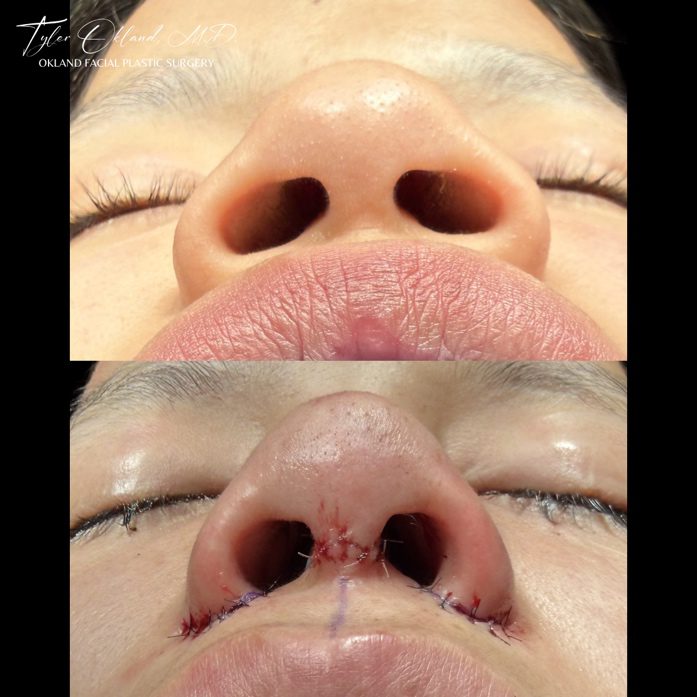
When the nostrils or alar base are excessively wide or flare with smiling, I can narrow and reshape the nasal base with carefully placed incisions hidden in the natural creases around the nostrils. The amount and pattern of reduction are customized; over-narrowing can look operated and erase characteristics that belong to the face.

Before-and-after immediate results of alar base reduction (nostril narrowing).Before-and-after immediate results of alar base reduction (nostril narrowing).
On the table results for nostril narrowing.

Dorsal augmentation with rib cartilage

Some patients need addition rather than reduction. When the bridge or radix is low, dorsal augmentation can create height, improve the brow-to-tip line, strengthen frontal definition and bring the nose into better balance with the eyes, lips and chin. This is frequently useful in African American and Asian rhinoplasty, although the decision is based on the individual anatomy and desired result—not ethnicity alone.

Before-and-after views six months after primary rhinoplasty with rib cartilage dorsal augmentation and nasal narrowing.Before-and-after views six months after primary rhinoplasty with rib cartilage dorsal augmentation and nasal narrowing.Before-and-after views six months after primary rhinoplasty with rib cartilage dorsal augmentation and nasal narrowing.
Six-month result after primary rhinoplasty using rib cartilage for dorsal augmentation and nasal narrowing.
Ethnic rhinoplasty is not always about making the nose smaller. Sometimes harmony comes from narrowing or refining; sometimes it comes from adding support, projection or bridge height. The operation should be comprehensive, but the result should still feel personal: your identity preserved, your airway protected, and your nose optimized for the face you were born with.
05Case Examples

Primary Rhinoplasty Case Examples

The value of case examples is not that they show four noses I can make. It is that they show four different problems—and four different operations. The same philosophy should produce different shapes when the faces, anatomy and goals are different.

Individual results vary. Photographic simulations are communication tools, not guarantees.

Case 01

Case 1: Ultra-Thin Skin With a Significant Dorsal Hump

15 images

Preoperative assessment and simulation / Scroll to compare

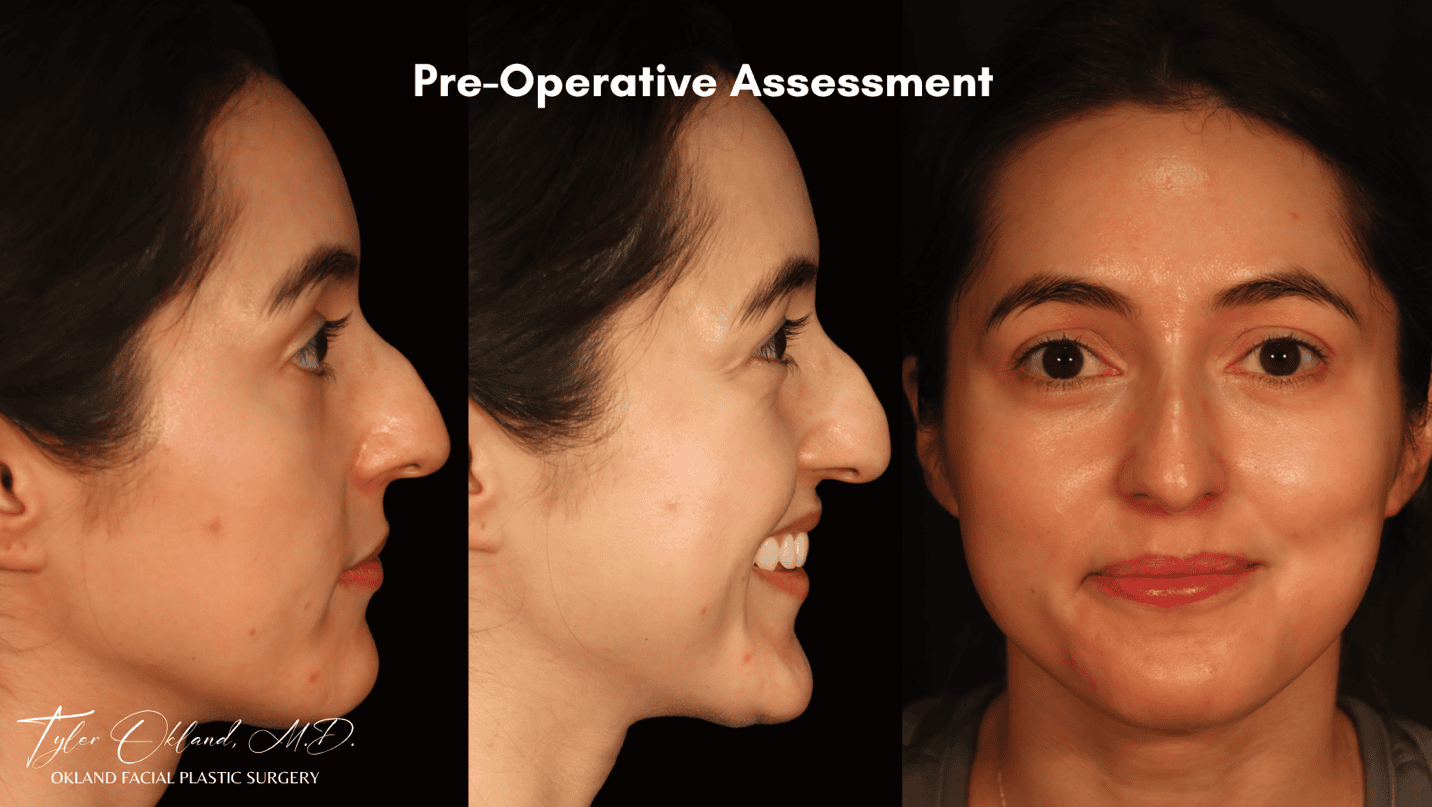
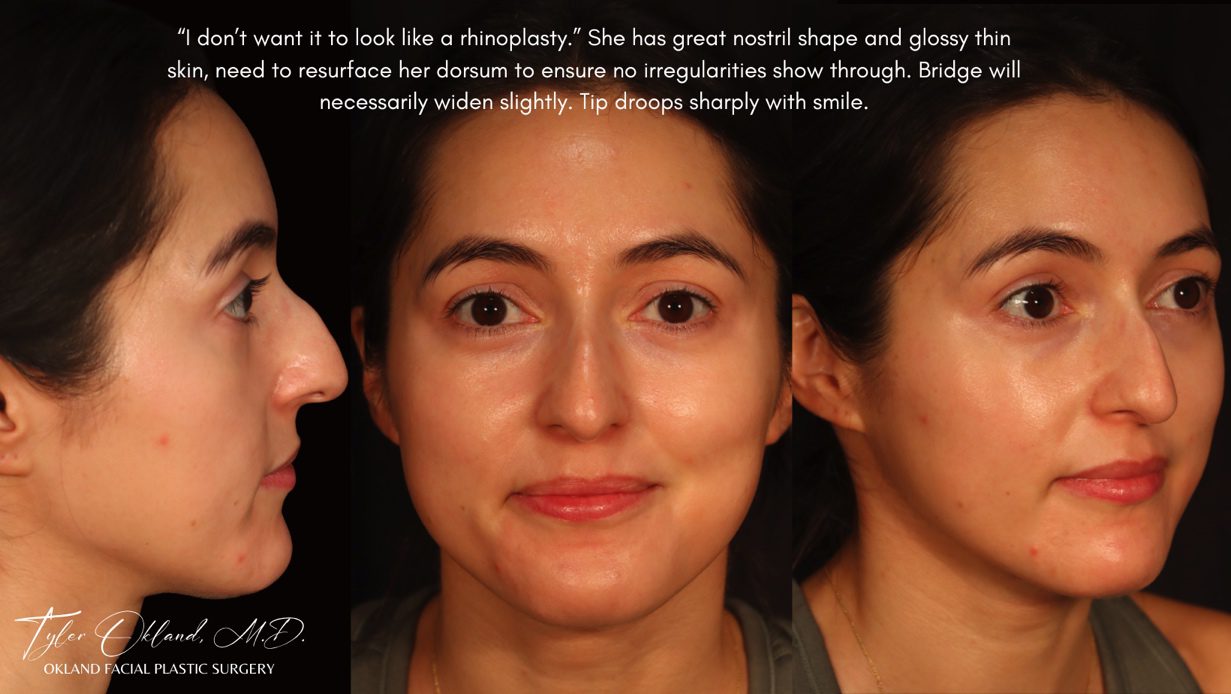
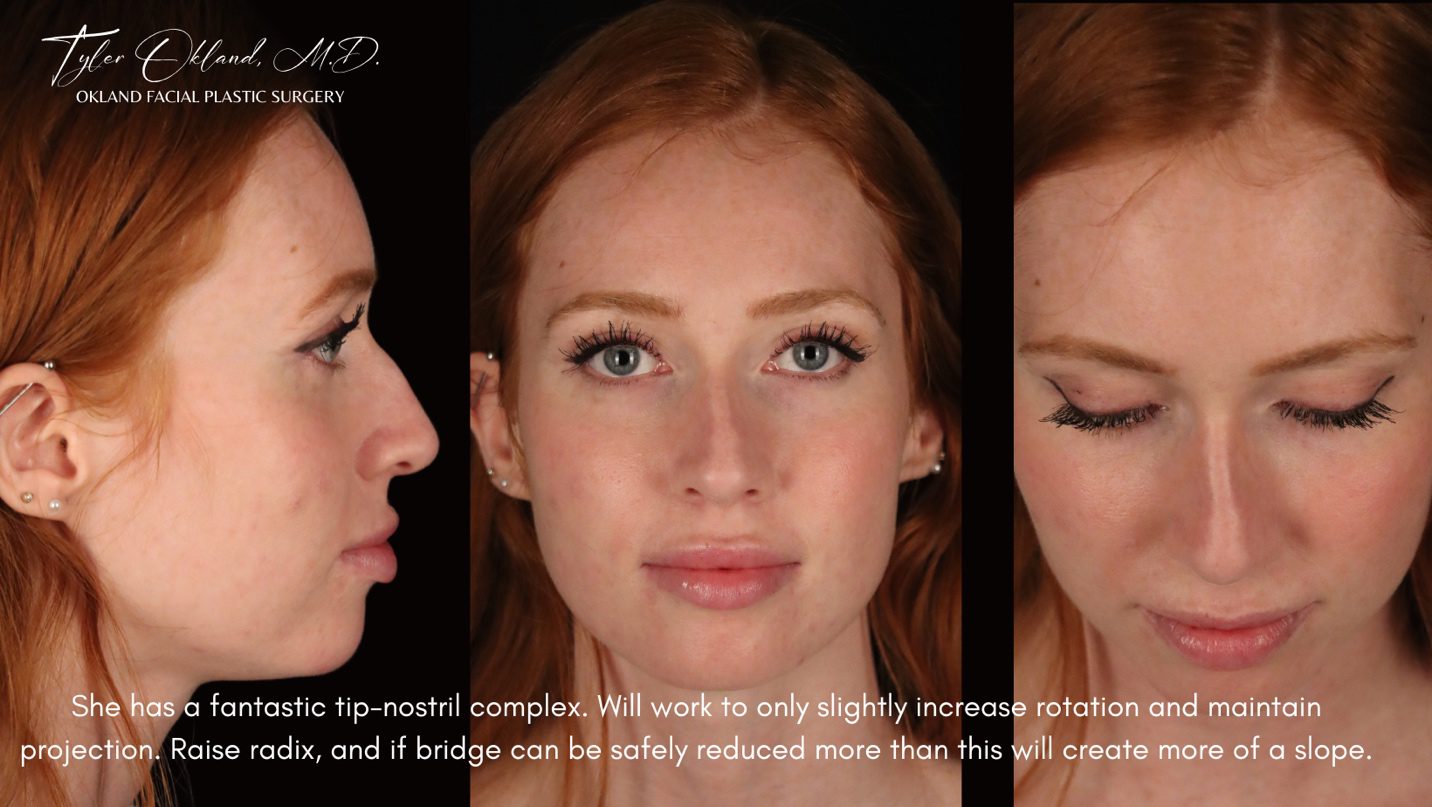
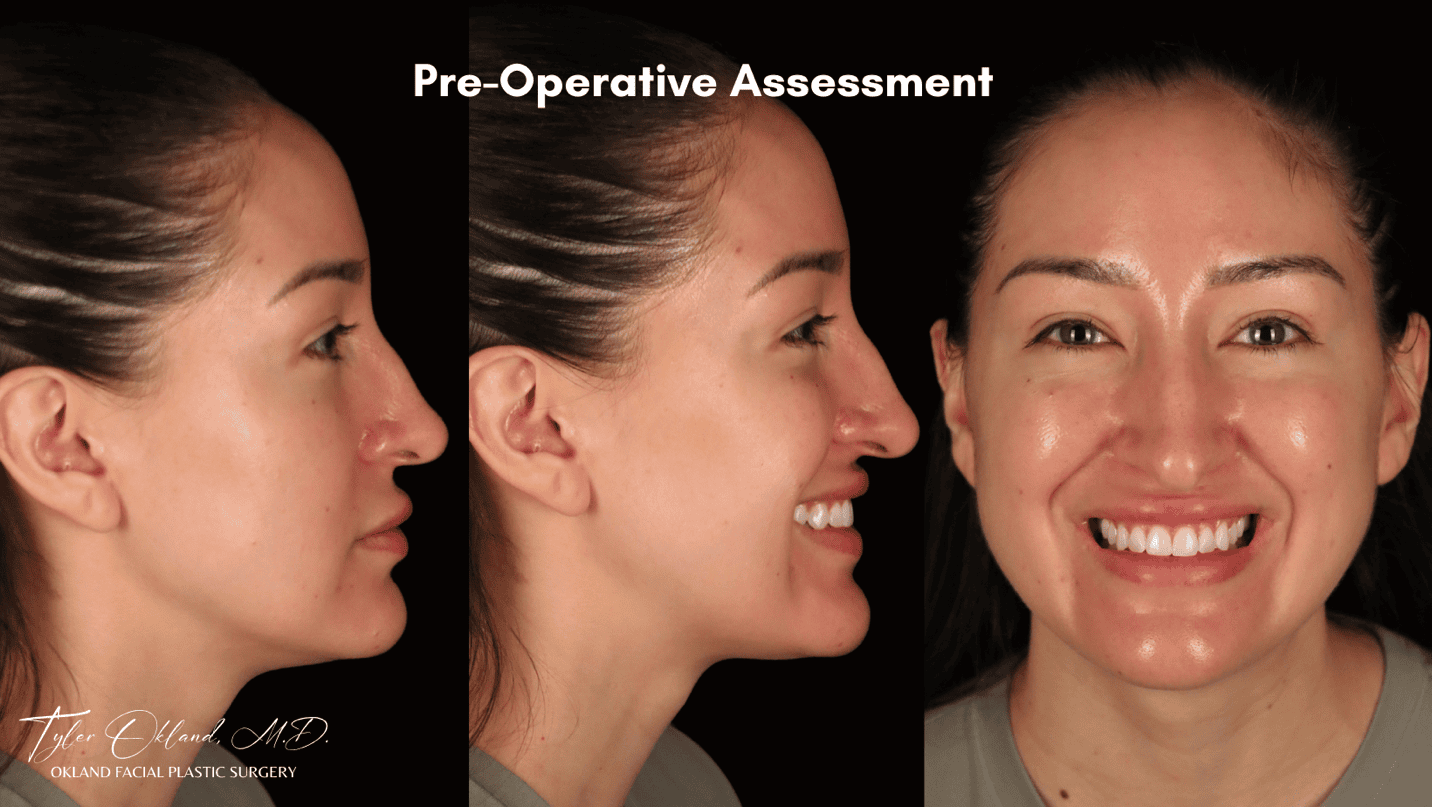
Case 01 preoperative photographs
Preoperative assessment
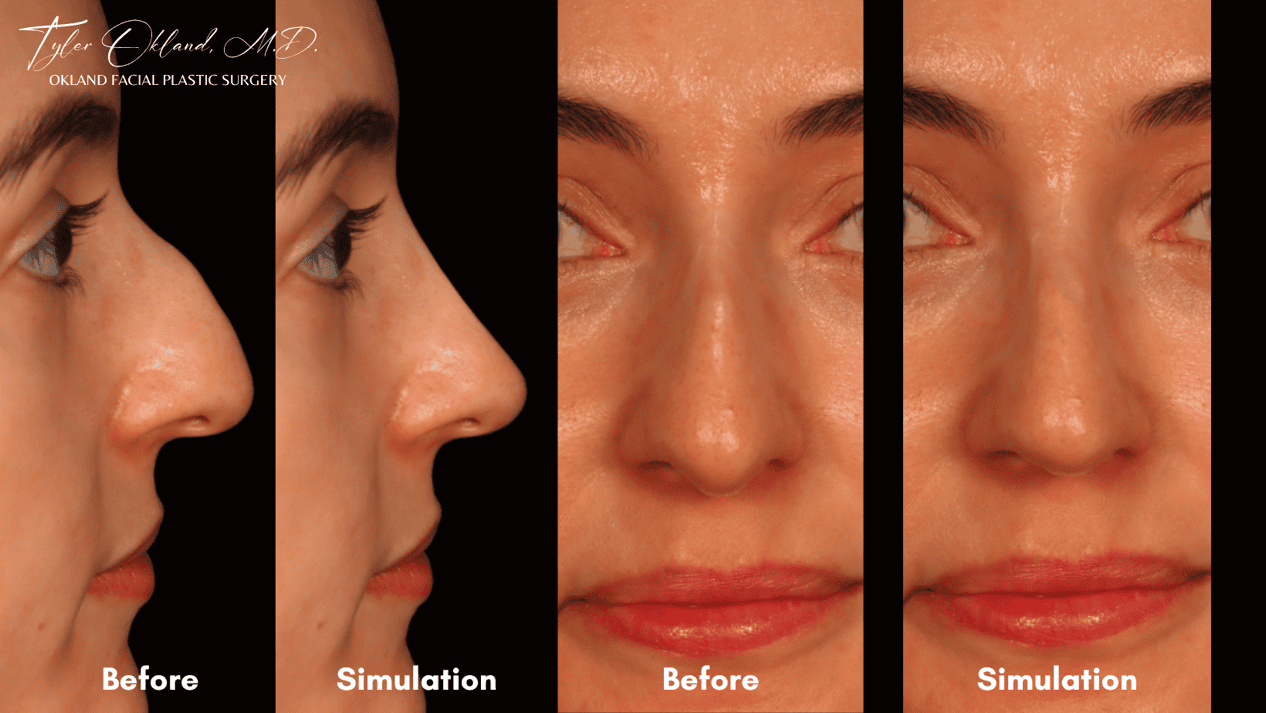
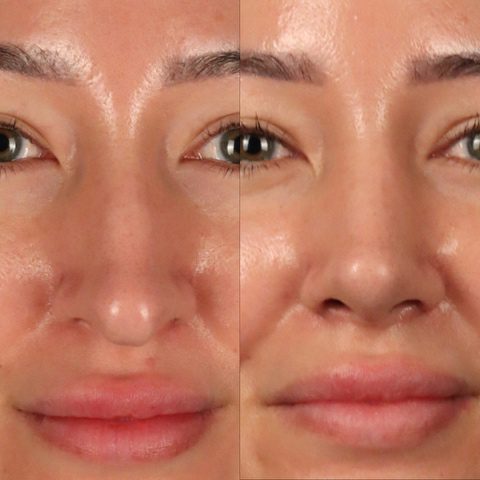
Case 01 consultation simulation
Case 01 consultation simulation detail
Patient and goals+

This beautiful 32-year-old woman came to see me with her husband looking for a very natural rhinoplasty result. We discussed straightening and slightly widening her bridge, dramatically reducing the dorsal hump and improving nasal breathing. From the beginning, I loved the glossy quality of her exceptionally thin skin and the shape of her nostrils at rest.

Preoperative plan and simulation+

Preoperative simulation—not a guaranteed result.

Operation+

I performed an open structural septorhinoplasty without a septal extension graft. Instead, I secured the tip complex to the anterior septal angle and used a small columellar strut. I straightened her septum, lateralized her inferior turbinates and placed a fine layer of cartilage paste over the bridge. Because ultra-thin skin reveals nearly every irregularity beneath it, I spent approximately one hour contouring the bridge after reducing the bone and cartilage, creating a seamless transition from the nasal bones to the middle vault.

Result at six months+

The result preserves her identity and highlights her natural beauty. It does not announce itself as a rhinoplasty. Despite her exceptionally thin skin, the bridge is remarkably smooth, with beautiful dorsal aesthetic lines and no visible step-offs from the nasal bones to the middle vault. Her nostril shape is maintained, and her tip no longer droops when she smiles.

Next Case 02
Case 02

Case 2: A Severely Crooked, Obstructed Nose With Radix Augmentation

11 images

Preoperative assessment and simulation / Scroll to compare

Case 02 preoperative photographs
Preoperative assessment
Case 02 consultation simulation
Case 02 consultation simulation detail
Patient and goals+

This beautiful 27-year-old woman came to me with a severely crooked nose on frontal view and a major septal deviation. Her nose was functionally obstructed, with no consistent airflow on either side. Her skin was very thin, particularly along the bridge where most of the work would be performed. She also had a low radix—the root of the nose where the bridge begins between the eyes. In her face, the low radix accentuated the brow, made the nose appear shorter and made the profile look more beak-like. I loved her tip highlights, tip rotation and tip projection. This was a case in which widening the bridge slightly would actually improve the aesthetic result.

Preoperative plan and simulation+

Preoperative simulation—not a guaranteed result.

Operation+

I performed an open structural septorhinoplasty with a right septal extension graft; bilateral extended spreader grafts, with a wider graft on the right; a columellar strut; radix grafting; cartilage paste along the bridge; midvault cephalic-trim onlay grafts; and no osteotomies.

Result at seven months+

Her result is stunning, with subtle tip rotation and narrowing, a gorgeous whisper of a slope, and a functioning nose that breathes well. There is a dramatic improvement in frontal-view asymmetry, and she is significantly straighter. She does not have mathematically perfect symmetry—no natural face does—but this is a major improvement in symmetry from every view.

Next Case 03
Case 03

Case 3: Thick Skin, Poor Tip Support and a Crooked Bridge

13 images

Preoperative assessment and simulation / Scroll to compare

Case 03 preoperative photographs
Preoperative assessment
Case 03 consultation simulation
Patient and goals+

This gorgeous 31-year-old woman came to see me with her husband hoping for a result that would enhance her natural beauty. She felt that her tip drooped and her nose widened when she smiled. From the beginning, I loved her skin texture, natural supratip break, eye and lip shape, and supporting facial anatomy. We discussed lowering and straightening the bridge while rotating and supporting the tip. Because her tip drooped significantly with smiling and created a deep horizontal wrinkle beneath the columella, I thought supporting the tip might also improve upper-lip position and potentially soften the way her smile pulled on the nose.

Preoperative plan and simulation+

Preoperative simulation—not a guaranteed result.

Operation+

I performed an open structural septorhinoplasty with a right septal extension graft, a right extended spreader graft, bilateral domal micrografts, selective thinning of the nasal superficial musculoaponeurotic system, placement of a small piece of that tissue at the radix, osteotomies and inferior turbinate reduction.

Three Month Outcome—An Early Result+

Her upper-lip position appears improved and fuller after the tip was supported. The right extended spreader graft filled the right middle-vault deficiency and improved breathing alongside tip support, nasal-valve strengthening and inferior turbinate reduction. I was intentionally conservative with rotation because her starting point was less rotated, and dramatic changes in rotation are one of the most common reasons patients struggle to recognize themselves after rhinoplasty. Selective soft-tissue thinning allowed me to create beautiful tip narrowness, particularly on profile view. At three months, this is an early result. Her thick skin will continue to contract and refine over the coming year and potentially beyond.

Thick skin continues to refine for 12–24 months.

Next Case 04
Case 04

Case 4: Ethnic Male Rhinoplasty With Severe Asymmetry

9 images

Preoperative assessment and simulation / Scroll to compare

Case 04 preoperative photographs
Preoperative assessment
Case 04 consultation simulation
Patient and goals+

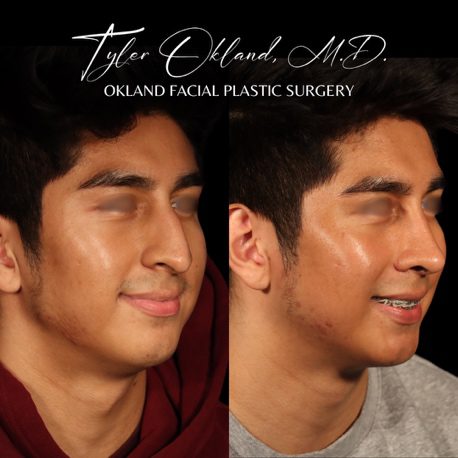
This 24-year-old man came to me feeling that his nose did not fit his face. He was bothered by the dorsal hump, tip droop and severe frontal-view asymmetry. He wanted more rotation—specifically telling me, “I want my nose to be more feminine”—more tip support, as much improvement in symmetry as I could safely create, and less nostril width. I thought he had fantastic, strong cartilage, a strong radix and beautifully defined supra-alar creases.

Preoperative plan and simulation+

Preoperative simulation—not a guaranteed result.

Operation+

I performed an open structural septorhinoplasty with a left septal extension graft, a morselized radix graft, osteotomies and selective contouring along both sides of the bridge.

Result at seven months+

His dorsal aesthetic lines improved dramatically, and the tip has strong support with a degree of rotation intentionally greater than a conventional masculine target, consistent with his stated goals. The nose is defined and sleek but not garish or radical, and he reports breathing better than ever.

Back to Case 01
06Recovery

Rhinoplasty Recovery: What to Expect, Week by Week

Most patients are surprised that rhinoplasty recovery is more inconvenient than painful. The first week is defined primarily by congestion, pressure and swelling—not severe pain. Every once in a while, a patient returns to my office the week after surgery and reports being quite uncomfortable, but this is the exception rather than the rule.

This timeline reflects the typical recovery in my practice. Your experience may differ depending on your skin thickness, the extent of your operation, whether your surgery is primary or revision rhinoplasty, and how your body heals. If the instructions I give you personally differ from anything on this page, follow your individualized instructions.

01 · Days 0–3The First 24–72 Hours After Rhinoplasty+

After surgery, you will wake up in the post-anesthesia care unit, or PACU, with a dedicated recovery nurse taking care of you. You will be groggy and will likely drift in and out of sleep. Most of my rhinoplasty patients take approximately 30 minutes to wake up enough for a family member or friend to visit them.

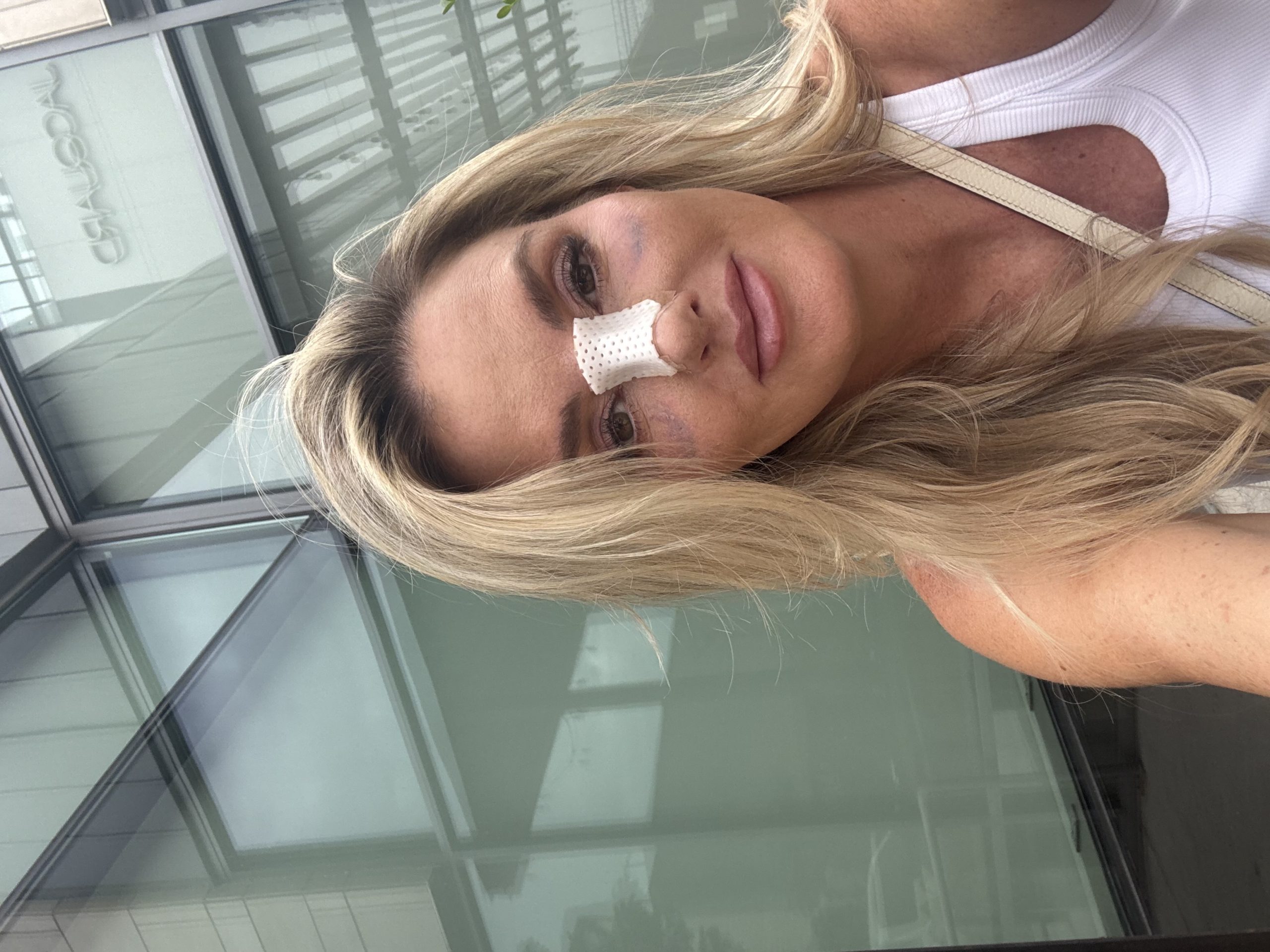
Your nose will be covered with surgical tape and a small thermoplastic cast. You will have dissolvable sutures along the columella and, if you underwent nostril narrowing or alar base reduction, non-dissolvable sutures concealed along the base of each nostril. You will also have thin, tube-shaped silicone splints inside the nose.

Once your recovery nurse clears you for discharge, you may return home or to your hotel or Airbnb. Someone you know and trust must drive you and remain available to help you. A rideshare or taxi is not sufficient because the effects of general anesthesia will still be present.

During the first night, you can expect some pressure, discomfort and possibly a headache. A small amount of bleeding from the nostrils is also normal. I recommend wearing a drip pad beneath the nose to make this less annoying. To create one, fold a piece of gauze beneath the nostrils and secure it with tape to each cheek.

Wound care begins the morning after surgery:
  • Apply Aquaphor to the external incisions twice daily.
  • Use saline nasal spray five times daily.
  • Begin your antibiotic and steroid as prescribed.
  • Keep the nasal cast completely dry for the first eight days.

The silicone splints inside the nose are hollow tubes. Keeping them clean with saline gives you the best chance of breathing through them during the first week. If they become congested with blood, mucus or debris, breathing through them will become more difficult.

Most patients stop taking narcotic pain medication after the second day and transition to acetaminophen, or Tylenol, alone. Take all medications only as directed in your postoperative instructions.

You may shower, but you cannot get the nasal cast wet during the first eight days. For the first six weeks, I want you sleeping on your back rather than your side. Side sleeping or resting with your head tilted can place asymmetric pressure on the healing nasal bones and contribute to asymmetry. During the first week, sleep on your back with your head elevated to help prevent swelling from pooling in the nose.

I will text you the night of surgery to make sure you are doing well. If you have an emergency or a serious concern, I want you to call me. The tip of your nose will look too high, that is expected.

02 · First WeekDays 3–8+

Swelling generally peaks between the third and fifth days. This is also when bruising beneath the eyes, if present, becomes most noticeable.

In my practice, approximately 5–10% of rhinoplasty patients develop dark bruising beneath the eyes. If this happens, I will send you to my med spa, Tone Medical Aesthetics, for a complimentary laser treatment to help the bruising clear more quickly. The treatment takes approximately five minutes and is not painful.

Day 5 after rhinoplasty with the thermoplastic cast still in place.

Continue applying Aquaphor and using saline spray throughout this period. You will complete your antibiotic and steroid during the first week. After that, the only medication you may still need is Tylenol as needed for discomfort.

Between days six and eight, I will see you personally in my office. We will catch up on what you watched on television all week, and then I will remove your internal nasal splints.

A single suture inside the nose holds the splints in position. I cut that suture, and the splints slide out. Removal is uncomfortable but very quick and is not typically described as painful. Most patients experience immediate relief and can breathe substantially better afterward.

During this appointment, I will also teach you how to remove your cast safely. I will give you your first roll of tape and demonstrate exactly how to tape your nose once the cast comes off.

03 · Week TwoDays 9–14: Cast Removal and the Swollen Potato Phase+

Your cast should loosen and come off in the shower on the tenth day after surgery.

On day nine, shower normally and allow warm water to run over the cast for approximately ten minutes. Repeat this on day ten. Bring a clean cotton swab into the shower and gently work it beneath the edge of the tape. The cast should gradually release without force. If it is not loosening easily, stop and contact my office rather than pulling it off.

When the cast comes off, you will probably have a big, swollen potato nose. The tip should look too high, the bridge may look too wide, and the swelling may be asymmetric. Do not judge your result at this stage.

Five minutes after cast removal with expected early swelling, excess rotation and asymmetry.
Five minutes after cast removal: swelling, excess rotation and asymmetry are expected at this stage.

That night, you will begin taping your nose. I will have already demonstrated the technique, but the basic idea is to place several pieces of tape horizontally across the bridge, stopping before the tip, followed by one piece slung beneath the tip to support it just above the nostrils.

How to tape the nose after rhinoplasty cast removal.
How to tape the nose, starting the night after cast removal and continuing nightly for three months. This is my beautiful wife once again graciously allowing me to use her as a model for my patients.

You will continue taping your nose nightly for three months—and longer if you continue to notice a benefit. Most patients see less swelling in the morning when they have taped overnight.

Do not expect the swelling to improve steadily during this period. It may fluctuate from day to day and can temporarily look worse after the cast is removed.

Most patients can return to work or school within seven to ten days. Your nose will still be swollen, but usually only the people closest to you will recognize how different it looks day to day.

04 · Early HealingWeeks 2–6+

Swelling usually begins to improve more noticeably toward the end of the third week. The nose will remain wider from the frontal view, but the profile often becomes refined relatively quickly—particularly in patients with thinner skin.

The tip will gradually settle during this period and begin to look more natural on the face. The nose will feel firm, and numbness or altered sensation over the tip is normal.

Patients with thicker skin may occasionally feel that their nose looks larger than it did before surgery. This can be unnerving, but it is normal. Thick skin follows a slower swelling-resolution pathway than thin skin.

Your nose may look different every morning. Some days it will look better than others. Despite that daily variability, the overall trend should be improving.

If your recovery is uncomplicated, you may return to exercise approximately two and a half weeks after surgery. Many of my patients tape their nose while exercising because it helps everything feel more stable.

I ask patients to wait six weeks before beginning to judge their aesthetic result. As a practical rule of thumb, I expect approximately 60% of the swelling to have resolved by six weeks. The remainder improves much more gradually over the following one to two years.

By approximately two and a half weeks, I expect the external incisions to be closed. At that point, you may stop using Aquaphor and begin applying a silicone-based scar ointment and broad-spectrum sunscreen.

At the end of six weeks, you may:
  • Resume wearing glasses and sunglasses.
  • Begin sleeping on your side again.
  • Stop using saline spray if you wish.

That said, saline spray is excellent for the general health of your nose, and you can continue using it indefinitely.

I will see you again at approximately six weeks, either virtually or in person, for your second postoperative evaluation. We will schedule this appointment when I remove your splints.

05 · RefinementMonths 2–6+

After six weeks, there are generally no meaningful quality-of-life restrictions. Healing continues, but it becomes a slower and much less intrusive process.

Between six weeks and six months, you will typically progress from approximately 60% to 80% resolution of your swelling. These percentages are useful estimates, not promises; skin thickness and the extent of surgery make a meaningful difference.

I will visit with you again at three months and six months to ensure that healing continues appropriately.

Your nose will always be somewhat firmer than it was before structural rhinoplasty. During these months, however, it begins to feel less like something unfamiliar attached to your face and more like part of you again.

The columellar scar should be nearly invisible by this stage.

06 · Long-Term HealingMonths 6–12—and Beyond+

The vast majority of swelling should resolve by the end of the first year, particularly in patients with thinner skin. Patients with thicker skin—and many revision rhinoplasty patients—may continue seeing refinement for up to two years.

By the end of the first year, your nose should be very close to its final result. I expect no pain and no meaningful day-to-day swelling at this point, although the occasional margarita night with chips and queso can still make nearly any nose look a little swollen the next morning.

I will check in with you again at the one-year mark. By then, most of my patients are busy living their lives and loving their noses, so they often choose to make the one-year visit a grateful text message or selfie instead of an office appointment.

Those are some of the best patient messages I receive.

07Risks + Limitations

What Are the Risks and Limitations of Rhinoplasty?

Rhinoplasty can create extraordinary change, but it is still an operation performed on living tissue—not a sculpture carved from stone. I control the analysis, the surgical plan and the execution of that plan. I cannot completely control how skin contracts, scar tissue forms, cartilage settles or swelling resolves. A thoughtful operation anticipates those forces and builds around them, but no surgeon can remove biology from the equation.

In plain terms, the risks of rhinoplasty include bleeding, infection, complications from anesthesia, poor healing or scarring, changes in sensation or smell, breathing problems, septal perforation, asymmetry, contour irregularities, dissatisfaction and the possibility of another operation. Swelling, congestion, stiffness, numbness and temporary asymmetry, however, are expected parts of healing—not usually complications.

The most common risk of rhinoplasty is that you don’t like the shape of your nose. Published studies report revision rates after primary rhinoplasty ranging from approximately 5% to 15%. I believe the true national rate is likely near the upper end of that range because studies often cannot capture patients who undergo revision with another surgeon, are lost to long-term follow-up, or remain dissatisfied but decide against another operation. A reasonable estimate is that approximately one in seven primary rhinoplasty patients will eventually undergo—or seriously consider—a secondary procedure.

My goal is not to frighten you with an exhaustive consent-form inventory. It is to help you understand what is normal, what is possible and where the honest boundaries of surgery lie.

What Rhinoplasty Cannot Guarantee+

No rhinoplasty can guarantee perfect symmetry. Every human face begins with some degree of asymmetry in the eyes, brows, cheeks, jaw, nostrils and underlying skeleton. I can improve nasal asymmetry—sometimes dramatically—but I cannot make two biologically different sides of a face mathematically identical.

Nor can surgery guarantee an exact computer-generated result. Any photographic morph or simulation is a communication tool. It helps us discuss bridge height, tip projection, rotation and overall direction, but it is a map—not a contract. The final result must pass through the realities of your skin, cartilage, bone, scar tissue and healing response.

Skin thickness is particularly important. Thick skin can conceal some of the fine definition created underneath it and generally takes longer to contract around a newly shaped framework. Very thin skin reveals definition beautifully, but it can also reveal tiny irregularities that thicker skin would hide. Weak cartilage may require more support. Strong cartilage may resist reshaping. Each anatomy offers different opportunities and imposes different limits.

Some requested changes can only be taken so far safely. If making a nose smaller would compromise its blood supply, structural support or airway, I will stop before crossing that line. A smaller nose is not a better nose if it pinches, collapses or struggles to breathe. More surgery is not always better surgery. It is always easy to remove more tissue—that is not the obstacle. I love the nose as an organ of function, and I will push back on a desired plan if I fear it will compromise the structural or functional integrity of the nose.

Normal Healing Can Look Abnormal+

A healing nose frequently looks strange before it looks beautiful. The tip may initially appear too high, wide, firm or rounded. One side may swell more than the other. The bridge can look broader than expected, and the nose may change noticeably from one morning to the next. Early asymmetry often reflects uneven swelling rather than the final structure underneath it.

Cast removal compared with three months after primary rhinoplasty, showing early swelling resolving and the tip settling into a more natural rotation.
Cast removal compared with three months after primary rhinoplasty: early swelling has resolved and the tip has settled into a more natural rotation.

Numbness, stiffness, congestion, pressure and fluctuating airflow are also common during early healing. These sensations gradually improve, but the tip can remain firm or unfamiliar for months.

A rhinoplasty result should not be judged at cast removal, at six weeks or from a single photograph taken during an unusually swollen morning. Meaningful refinement continues for at least a year, and patients with thicker skin may continue to see improvement for up to two years. The recovery timeline above explains that process in greater detail.

What Are the Medical and Functional Risks of Rhinoplasty?+

Every operation carries risk. The most important risks associated with rhinoplasty and septoplasty include:

  1. Bleeding, infection and anesthesia-related complications. Most bleeding is limited, but persistent bleeding can require urgent evaluation or treatment.
  2. Delayed wound healing or scarring. The small columellar incision usually heals extremely well, but an incision can occasionally remain visible, widen or heal irregularly. Skin discoloration, injury or compromised blood supply is uncommon but possible.
  3. Changes in sensation or smell. Temporary numbness of the nasal tip is common. A temporary change in smell—including an unpleasant or foul smell from crusting, retained material or dissolving sutures—can also occur during recovery. Persistent altered sensation, discomfort or smell disturbance is less common.
  4. Breathing problems. Although improving the airway is fundamental to my operation, obstruction can persist or, uncommonly, worsen. Scar tissue, swelling or weakness of the internal or external nasal valves can affect airflow.
  5. Septal perforation. A perforation is a hole in the septum between the two nasal passages. This is uncommon but can cause crusting, bleeding, whistling or breathing symptoms. A persistent symptomatic perforation may require additional treatment or surgical repair.
  6. Asymmetry or contour irregularities. Small differences between the two sides, visible or palpable edges, residual deviation, overcorrection or undercorrection can occur as the nose heals.
  7. Cartilage graft-related changes. Cartilage can occasionally become visible, move, warp or heal differently than expected.
  8. The need for additional treatment or surgery. Some concerns can be observed or treated conservatively. Others may ultimately require a revision procedure.
Could I Need Another Rhinoplasty?+

Yes. There is always a possibility that additional surgery could be beneficial, even after a carefully planned and well-executed operation.

Rhinoplasty is performed in millimeters, and small differences can be visible in the center of the face. Scar tissue can contract unevenly. Cartilage can shift or warp. A contour irregularity or breathing concern may persist as the tissues settle. The possibility of revision does not automatically mean the original operation was poorly performed—but it is a possibility every patient should understand before choosing surgery.

The threshold for another operation should be high because revision surgery introduces additional scar tissue and complexity. Unless there is a problem requiring earlier intervention, I generally allow the nose to heal for at least 12 months before deciding whether another operation is appropriate. Many early concerns improve substantially with time and do not require surgery at all.

How I Reduce Risk+

The assessment I described earlier is not aesthetic theater; it is risk management. I study the face, skin, skeletal structure, septum, nasal valves, turbinates, tip support and cartilage strength before deciding what the operation should accomplish. I watch the nose breathe and move because a static photograph cannot reveal every functional weakness.
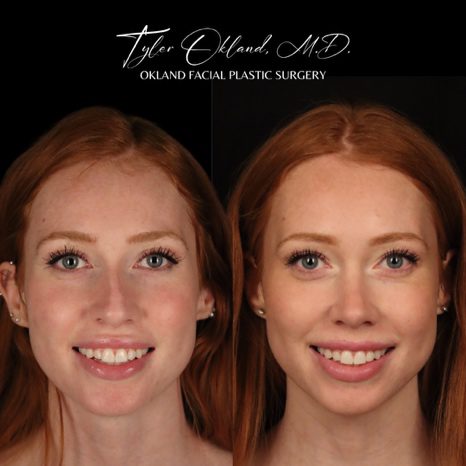
During surgery, I use an open structural approach so I can directly examine, correct and reinforce the anatomy. I perform septoplasty and functional intervention in every case, strengthen areas vulnerable to collapse and use cartilage grafts to create durable support. I avoid sacrificing structure simply to make the nose smaller, and I respect the blood supply of the skin and soft tissue.

Close follow-up matters as well. I want to recognize unexpected healing early, while there may still be an opportunity to influence it. You also have an important role: following medication and wound-care instructions, avoiding nicotine, protecting the nose from pressure or trauma and attending postoperative visits all affect healing.

None of these measures makes risk disappear. They make the operation more deliberate, the anatomy more supported and the healing process more closely supervised.

When I Will Recommend Against Surgery+

I will recommend against rhinoplasty when the desired change would weaken the nose, compromise breathing or ask the skin and underlying anatomy to deliver something they cannot safely produce. I may also recommend waiting when a medical condition, nicotine exposure or inability to follow the recovery plan makes healing unacceptably risky.

Expectations matter just as much as anatomy. Rhinoplasty can refine the relationship between the nose and face. It cannot guarantee perfect symmetry, reproduce another person’s nose exactly or guarantee how someone else will respond to your appearance.

Sometimes the most responsible recommendation is not yet, not that much or not at all. Saying no is part of taking rhinoplasty seriously. I have found that the happiest patients after rhinoplasty are often the ones who immediately loved the changes I made during consultation simulation. Rhinoplasty is subjective, but it is not arbitrary. You should find beautiful what your surgeon finds beautiful. If we are on the same aesthetic page during the consultation, I feel much better about my ability to deliver something you love. If we reach simulation three, four or five and still cannot find a shape you love, I become less confident that I can get you to a happy place surgically.

Mismatched expectations are the most common reason I refuse to offer surgery during the consultation. If this is the case, I will return your consultation fee, no questions asked.

My responsibility is not to promise perfection. It is to tell you honestly what your anatomy can deliver, explain its limitations, protect the strength and function of your nose and pursue the best possible result without sacrificing your identity. The standard is not a perfect object. It is a nose that belongs to your face, breathes well and remains supported.

08FAQs

Primary Rhinoplasty Frequently Asked Questions

What is the difference between primary rhinoplasty, septoplasty and septorhinoplasty?+

A primary rhinoplasty is the first rhinoplasty performed on a nose. A septoplasty straightens or reconstructs the septum—the internal wall that divides the two nasal passages—to improve support or breathing. A septorhinoplasty addresses both the external nose and the septum during the same operation.

Every primary rhinoplasty I perform is an open structural septorhinoplasty. I am reshaping the nose, but I am also examining and correcting the septum, protecting the airway and reinforcing the framework with cartilage where support is needed. The aesthetic and functional operations are not separate in my practice; they are two parts of the same operation.

Who is a good candidate for primary rhinoplasty, and how old do you need to be?+

A good candidate is healthy enough for elective surgery, has finished most facial and nasal growth, can avoid nicotine, can follow the recovery plan and has specific but realistic goals. Just as importantly, the patient and I need to agree on what looks beautiful for their face. Technical eligibility is not enough if we are trying to build two different noses.

For younger patients, surgery should generally wait until nasal growth is complete—typically around age 16 for females and 18 for males. Emotional maturity and stability of the patient’s goals matter at least as much as the birthday. There is no automatic upper age limit; overall health, skin quality, anatomy and expectations are more important than age alone.

Do you perform open or closed rhinoplasty, and will there be a visible scar?+

I perform open rhinoplasty. This requires a small inverted-V incision across the columella, the strip of skin between the nostrils, which connects to incisions hidden inside the nose. It allows me to lift the skin envelope and directly examine the septum, bridge, tip cartilages and nasal valves.

That visibility is valuable when the operation is being planned and executed in millimeters. The columellar incision generally heals as a fine, inconspicuous line. Open versus closed is less important than the surgeon’s judgment and skill with the chosen approach; open rhinoplasty is the approach that gives me the control I want for structural work.

Can rhinoplasty improve my breathing?+

Yes. Improving or protecting breathing is a goal of every rhinoplasty I perform. I straighten the septum in every case and formally evaluate the internal nasal valves, external nasal valves and inferior turbinates. When those structures are narrow, weak or obstructive, I address them during the same operation.

That does not mean surgery can guarantee perfectly equal airflow at every moment. Nasal breathing naturally alternates from side to side, and allergies or inflammatory disease can still cause congestion after structural surgery. Rhinoplasty can correct structural obstruction; it does not cure allergies. My objective is a nose that is both more beautiful and structurally open, strong and supported.
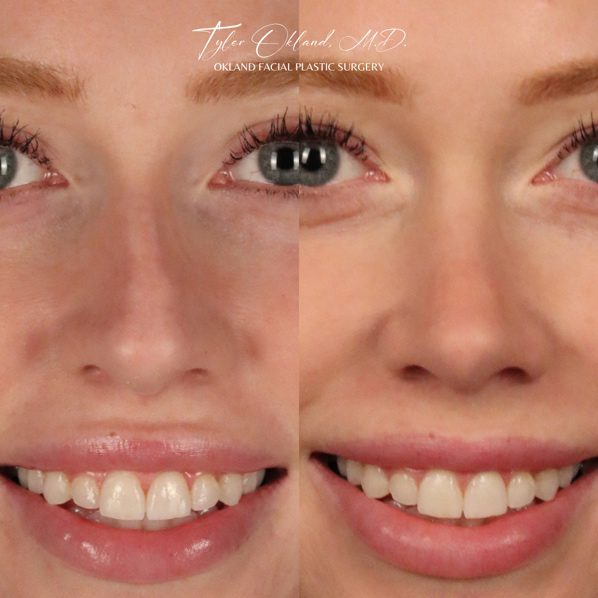
Will I need rib cartilage for my primary rhinoplasty?+

Most primary rhinoplasty patients have enough usable cartilage in the septum for the grafts I need. Rib cartilage becomes useful when the septum cannot provide sufficient volume or strength, or when the operation requires substantial structural rebuilding or dorsal augmentation. If you have had a previous septoplasty, I will recommend using either your rib or donor rib as backup for the operation.

I may recommend rib cartilage for a very low bridge, weak native cartilage, major projection or support requirements, or an anatomy in which stronger material will create a more durable result. Rib is not a sign that something has gone wrong or that the operation is automatically a revision. It is simply excellent building material when the nose requires more than the septum can safely provide.

Will the tip drop after rhinoplasty?+

The tip will usually settle, but it should not collapse or return to its preoperative droop. Those are different things. I generally tell patients that if they like how high the tip is immediately after surgery, I did not lift it enough. My patients should feel like their tip is too high after surgery because I expect some de-rotation, or settling, during the first few months afterward.

Immediately after surgery, swelling and the tension of newly positioned tissues can make the tip appear higher and more rotated than planned. As swelling resolves and the skin-soft-tissue envelope relaxes, the tip gradually looks softer, less upturned and more natural on the face. Most visible settling occurs during the first several weeks and months, with smaller changes continuing as the nose matures.

I plan for that settling. My structural technique uses cartilage support—frequently a septal extension graft—to secure the tip at the desired projection, rotation and axis. The objective is a tip that settles into position without significantly drooping again with time, gravity or smiling. Cast-removal position is not final position.

How painful is rhinoplasty, and will my nose be packed?+

Most patients find rhinoplasty more inconvenient than painful. The first several days are usually defined by congestion, pressure, swelling and sometimes a headache rather than severe pain. Most of my patients stop narcotic pain medication after the second day and use Tylenol as needed.

I do not use traditional nasal packing. I place thin, tube-shaped silicone splints inside the nostrils. If the tubes are kept clear with saline, many patients can breathe through them during the first week. I remove the splints during the first postoperative visit, generally between days six and eight. Removal is quick and usually produces immediate relief from pressure and congestion.

When can I return to work, exercise, glasses and normal activity?+

Most patients return to work or school approximately seven to ten days after surgery. The nose will still be swollen, but casual acquaintances usually notice much less than the patient does.

I generally allow exercise at two and a half weeks, beginning gradually. Glasses and sunglasses must remain off the nasal bridge for six weeks unless I have approved a protective alternative. Patients should also sleep on their backs and avoid pressure on the nose for the first six weeks. Contact sports or any activity that risks impact to the nose requires a longer, individualized restriction. Your specific instructions may change depending on what was performed and how you are healing.

How long does rhinoplasty swelling last, and when will I see the final result?+

The largest change occurs early, but the final refinement is slow. At approximately six weeks, I expect roughly 60% of the swelling to have resolved. By six months, approximately 80% is gone. Most thin-skinned noses are close to their final result around one year, while thicker-skinned noses may continue refining for up to two years.

The profile generally refines before the frontal view. Swelling also fluctuates: the nose can look different after exercise, travel, poor sleep, alcohol or a salty meal. Improvement is not perfectly linear. Judge the trend over months, not the appearance of a single morning or photograph.

Will my result look exactly like the consultation simulation?+

No simulation can promise an exact surgical result. I use photographic simulation to establish direction and make sure we share an aesthetic objective: bridge height, slope, tip projection, rotation and the overall relationship between the nose and face. It is a communication tool—a map, not a contract.

The final result must pass through skin thickness, cartilage strength, asymmetry, scar formation and the individual healing response. I want you to love the simulated direction immediately. If we require repeated simulations and still cannot agree on a beautiful shape, I would rather decline surgery and return the consultation fee than proceed and hope our tastes somehow align in the operating room.

Can rhinoplasty make my nose perfectly straight and symmetric?+

The goal of rhinoplasty is straightER. MORE symmetric. Rhinoplasty can substantially improve deviation and asymmetry, but it cannot create mathematical perfection. The nasal bones, cartilage, skin and surrounding face are asymmetric before surgery, and the two sides do not always respond identically during healing.

My objective is not to chase symmetry in one isolated photograph at the expense of breathing or natural appearance. It is to make the nose appear straighter, more balanced and harmonious across the frontal, profile and three-quarter views while preserving a stable airway. Small residual differences between the two sides are normal in every natural face.

How often is revision surgery needed after primary rhinoplasty?+

Published studies commonly report surgical revision rates between approximately 5% and 15%. I believe the true national rate is likely near the upper end of that range or higher because studies may miss patients who have another operation with a different surgeon, are lost to long-term follow-up or remain dissatisfied but decide against more surgery. A reasonable counseling estimate is that approximately one in seven primary rhinoplasty patients will eventually undergo—or seriously consider—a secondary procedure.

That does not mean every revision is a complete repeat rhinoplasty or that every small imperfection should be operated on. Some revisions are limited refinements. Others address a meaningful structural or breathing concern. No honest surgeon can promise a zero-percent revision rate because healing remains biological.

How much does primary rhinoplasty cost, and do you accept insurance?+

Rhinoplasty and septorhinoplasty in my practice are self-pay procedures. I do not participate with or submit claims to insurance, including for the functional portions of the operation.

My pricing page lists the current starting price for primary rhinoplasty. That estimate includes anticipated surgeon, operating-facility and anesthesia fees, although the final quote can change when an operation requires rib cartilage, substantial augmentation or other additional work. After I have examined your anatomy and created a surgical plan, my team will provide a clear, individualized quote before you decide whether to schedule surgery.

What happens during a rhinoplasty consultation with Dr. Okland?+

The consultation begins with your face, not a predetermined nose. I study the relationship between the nose, brow, eyes, lips, chin and skeletal structure from the frontal, profile and three-quarter views. I watch the nose during quiet breathing and smiling, then perform a functional examination of the septum, nasal valves, turbinates, skin and cartilage support.

We review what you want to change, but I also write down what I want to preserve. Standardized photographs and simulation help us establish a shared aesthetic direction. By the end of the visit, you should understand what I think is possible, what your anatomy may limit, how I would protect or improve breathing and whether our tastes are aligned well enough to proceed.

Continuity of care

Your Surgeon Should Still Be Your Surgeon After Surgery

Having cosmetic surgery on your face is an intimate thing. Recovery can make even the most confident patient feel vulnerable. I believe the surgeon you trusted to perform the operation should remain the person caring for you while you heal.

I am a double board-certified facial plastic and reconstructive surgeon. I trained for five years at Stanford and completed an additional fellowship year at Vanderbilt, developing expertise in both the functional and aesthetic elements of rhinoplasty. I now perform approximately 250 rhinoplasties each year. That experience matters—but my practice is not a factory.

Every surgical patient has my cell phone number. There is no answering service and no “let me see if the doctor is available.” If you are worried about something, you call me. I determine what is happening and what we need to do about it.

Why follow-up matters+

I also plan for extensive follow-up. Barring an emergency, I personally perform your postoperative visits and remove my own splints and sutures. I have not delegated that responsibility because the surgeon who built your nose should be the person watching it heal. I also designed a medical spa attached to my office specifically to help care for postoperative patients, including their skin, bruising and scars throughout recovery.

That relationship begins before surgery. We need to share an aesthetic objective and a definition of what belongs on your face. I may be the right rhinoplasty surgeon for you if you want a nose that looks natural, feels structurally strong and redirects attention toward your eyes, lips and smile. I may not be the right surgeon if you want an exact copy of someone else’s nose, the smallest nose technically possible or a surgeon who will agree with every requested change. I will push back when a plan would compromise breathing, weaken the nose or erase something important about your identity.

I am in the business of making people feel confident. I am not interested in building a factory around something this personal. The goal is not to leave with a “Dr. Okland nose.” It is to leave with your nose—stronger, more refined and more at home on your face—and to feel personally cared for throughout the process.